International fans usually describe Korean food as spicy. Ask someone who grew up eating it at home, and "sweet" comes up just as often — a complaint about how bibimbap, bulgogi, and packaged banchan taste now compared to a generation ago.
The short version
- Korean gochujang averages 27% sugar, and most brands don't disclose it.
- Teen girls get the most added sugar of any group in Korea.
- Export-focused 'swicy' gochujang is sweeter than the traditional domestic version.
That is not nostalgia talking. When Korea's national consumer watchdog tested the country's most common condiment, the lab result backed up the complaint.
A quarter of the jar is sugar, not chili
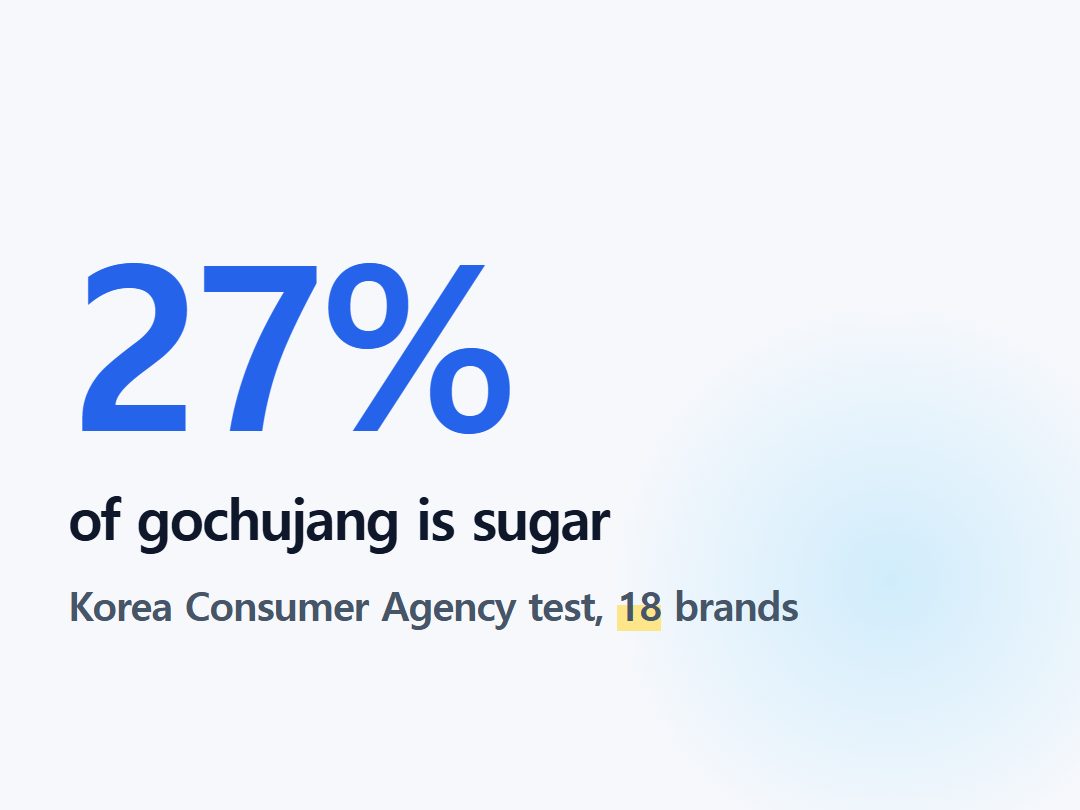
The Korea Consumer Agency tested 18 supermarket brands of gochujang (fermented red chili paste, the base of dishes like bibimbap and tteokbokki). Sugar made up an average of 27% of the product — as high as 31% in one leading brand, no lower than 25% in any of them.
Sodium was also high: 2,436mg per 100g on average, more than a full adult's daily recommended intake in a single serving. Only one of the 18 products listed its sugar content on the label at all.
Foreign fans taste spicy, Koreans taste sweet-spicy
This is the gap international readers usually miss. Korean food marketing abroad — fire noodle challenges, buldak, ghost-pepper tteokbokki — sells heat. Inside Korea, the more common flavor complaint for the last decade has been the opposite.
Older Korean home cooks describe a specific shift: their parents or grandparents added one sweetener to a sauce, or none, if the gochujang or fruit already carried sweetness. Recipes now commonly stack several.
- Refined sugar
- Corn syrup or rice syrup
- Honey
- Fruit purée or maesil-cheong (green plum syrup)
None of these is unusual on its own. Layered together in the same sauce, they push sweetness well past what a single ingredient would produce.
The pattern is not limited to gochujang. Bulgogi marinade, japchae seasoning, and tteokbokki sauce all use sugar or syrup as a base ingredient rather than a finishing touch — sweetness is built into the technique of these dishes, not added on top of it.
Sugary drinks are down, but sugary food is up
A five-year government survey of more than 30,000 people, covering 2019 to 2023, gives the trend a population-wide number rather than just a condiment-jar one. Sugar from processed foods held at 7.5–7.7% of daily calories nationally — inside the WHO's 10% guideline.
One group blew past it: girls aged 12 to 18 got 11.1% of their daily calories from added sugar, the highest of any group measured.
The composition is what makes this relevant to food, not just soda. Sugar from beverages fell 9.5% over those five years as zero-sugar drinks caught on. Sugar from snacks, bread, and rice cakes rose 3.8% over the same period, erasing most of that gain.
The sweetness is doing a job, not an accident
Manufacturers have a cost reason to lean on sugar. Corn-derived syrup dissolves faster than granulated sugar, mixes more easily into paste products, and is cheaper per unit of sweetness than refined sugar — a meaningful saving at the volume a national condiment brand produces.
It also does double duty. The consumer agency's testing found that 12 of the 18 gochujang brands blended in cheaper Chinese chili powder alongside Korean-grown peppers. A stronger, sweeter base helps mask exactly that kind of ingredient substitution.
Sugar went from imported medicine to mass product in one generation
For most of Korean history, sugar was not a kitchen staple at all. Through the Joseon dynasty, small amounts arrived from China and were treated as a costly import, closer to medicine than food — sweetness in everyday cooking came from honey or grain-malt syrup instead.
The first sign of sugar as an everyday product came in the 1890s, when general stores on Seoul's Jongno street began selling candy made from imported sugar. It was still a novelty item, not a cooking ingredient — that took another six decades.
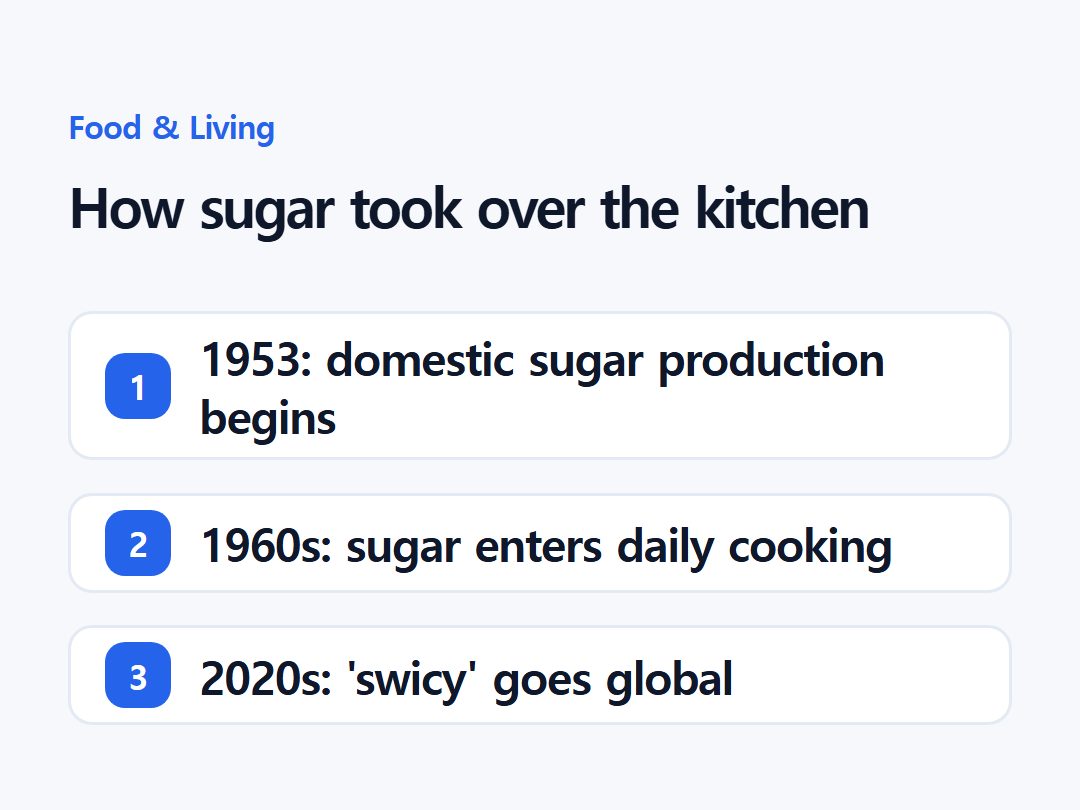
That changed fast. A refinery opened in Pyongyang in 1921, and after the Korean War, Cheil Jedang — founded by Lee Byung-chul, who would go on to build Samsung — began Korea's first large-scale domestic sugar production in 1953. Sugar moved into ordinary home cooking through the 1960s, alongside the spread of coffee shops and Western food culture introduced via the U.S. military presence.
Supply figures show the climb wasn't gradual
Government food-supply data trace the scale of the shift. Per-person sugar supply was about 4.8 grams a day in 1962. By 2002, that figure had risen to roughly 57 grams a day domestically, with international comparison tables putting Korea's supply closer to 99 grams — still below the heaviest sugar consumers worldwide, but a roughly twelvefold increase within two working generations.
These are supply figures, not proof that every gram was eaten, but they document a real trajectory rather than a rounding error.
Sweetness became an export strategy
The most recent driver has nothing to do with Korean nostalgia and everything to do with global sales. Combining sweet and spicy flavors — shorthanded online as "swicy" — has become a defined trend in U.S. food marketing, and Korean condiment makers are positioning gochujang inside it.
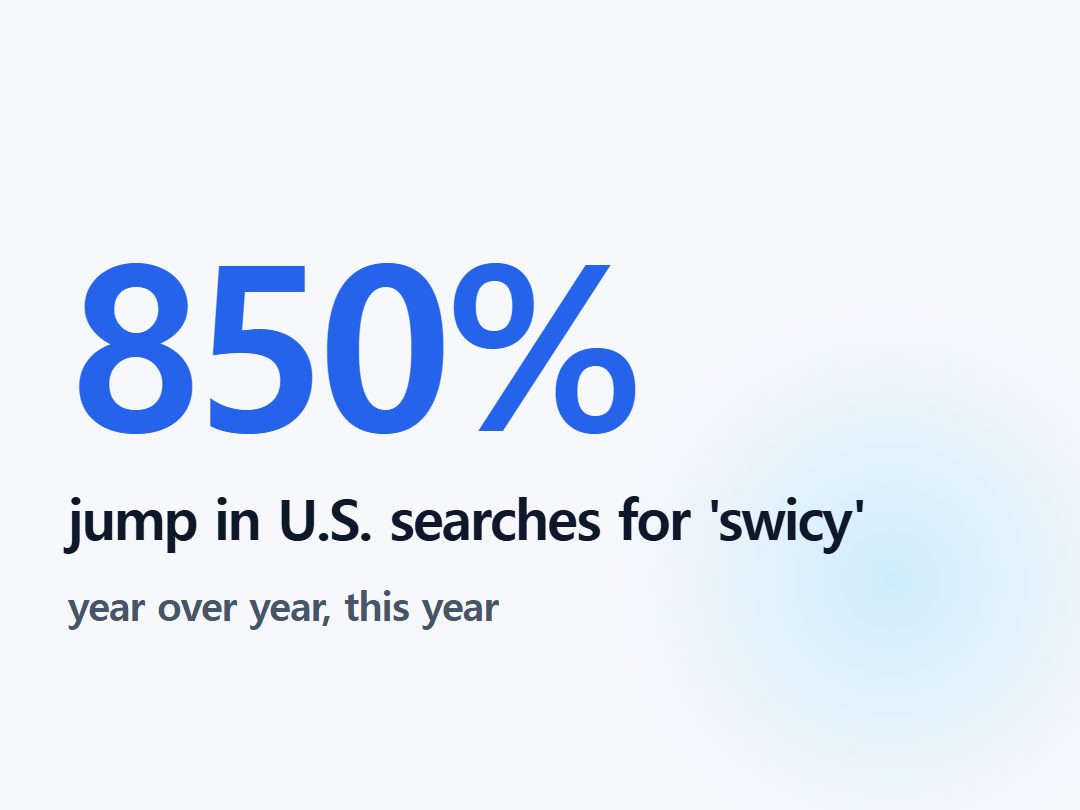
Search interest in "swicy" on Google in the United States rose roughly 850% year over year in the first seven months of this year. CJ CheilJedang, Korea's largest food conglomerate, has responded by reformulating gochujang for overseas markets rather than simply exporting the domestic recipe.
- Lower spice level, higher sweetness
- Thinner consistency for table use
- Tube packaging positioned as a dip or dressing
The company reports average annual growth of about 12% in overseas sauce sales since 2021. A gochujang-caramel cookie recipe that circulated on social media even drew coverage from The New York Times — evidence that the sweetened, export-facing version is shaping how international audiences meet the product first.
This matters for how the flavor spreads. A first-time buyer outside Korea is now more likely to encounter a thinned-out, sweetened, dip-style gochujang than the thick, sharp, traditionally fermented paste still sold domestically — two different products carrying the same name.
A sugar-reduction market is now growing just as fast
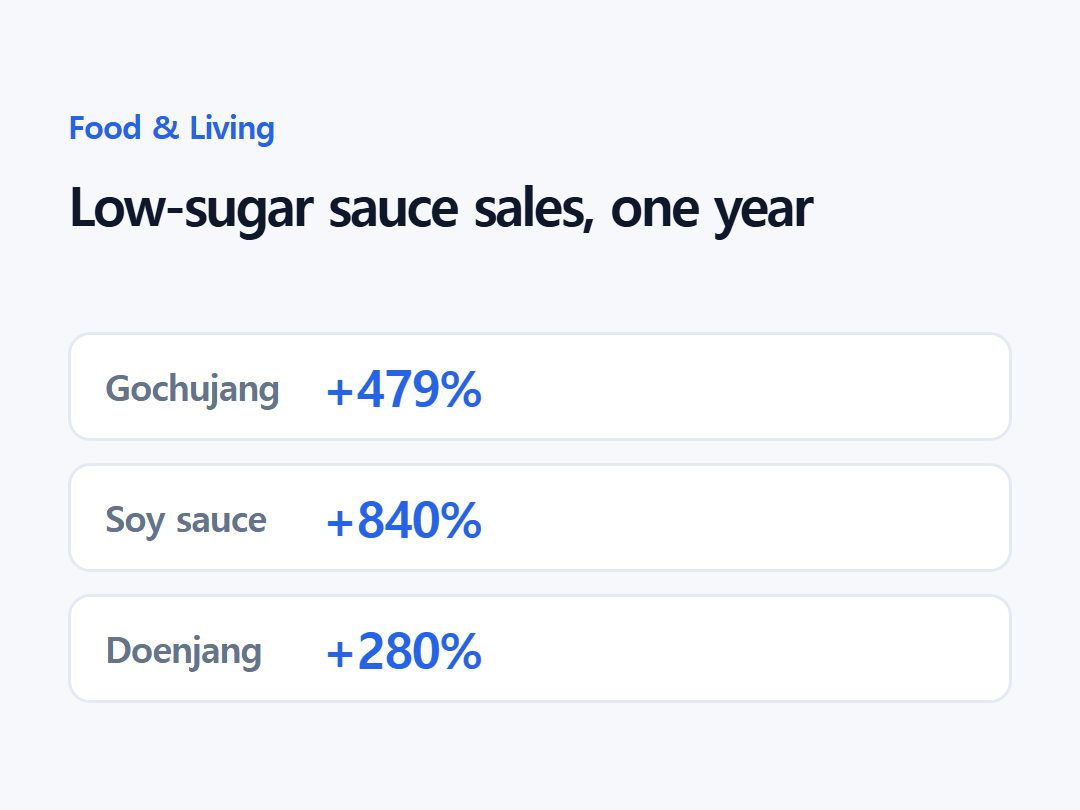
Inside Korea, the reaction has already arrived in sales data. Low-sugar sauce purchases rose 317% in a single year, from 13.9 billion won to 57.9 billion won, according to receipt data from 20,000 consumer panelists.
The rebound is sharpest in traditional jang, or fermented sauces, not diet dressings.
- Low-sugar gochujang purchases: up 479%
- Low-sugar ganjang (soy sauce): up 840%
- Low-sugar doenjang and ssamjang: up 280%
Major food companies have roughly quadrupled their low-sugar product lines, from about 30 items to around 120, in two years.
What labeling won't fix on its own
The regulatory gap is still open. The Ministry of Food and Drug Safety has said it will require nutrition labeling on jang products, following the consumer agency's finding that only one of 18 tested gochujang brands disclosed sugar content voluntarily. A firm start date has not been confirmed publicly.
A label alone does not lower sugar content — it only makes the existing 25–31% visible. Whether disclosure pushes manufacturers to reformulate their standard products, rather than sell a separate "low-sugar" line at a premium, remains unresolved.
It's also unclear how the export-driven "swicy" reformulation and the domestic low-sugar movement will settle against each other, since they are pulling Korean condiment recipes in opposite directions at the same time.
Low-sugar sauce sales growth by category (past year)
| Sauce | Sales increase |
|---|---|
| Ganjang (soy sauce) | +840% |
| Gochujang | +479% |
| Doenjang & ssamjang | +280% |
| All low-sugar sauces (overall) | +317% |
Frequently asked
Why does Korean food taste so sweet now?
Korean sauces like gochujang, bulgogi marinade, and tteokbokki sauce now stack multiple sweeteners — sugar, syrup, honey, fruit purée — instead of the single sweetener older recipes used.
How much sugar is in gochujang?
A Korea Consumer Agency test of 18 brands found sugar averaged 27% of the product, reaching as high as 31% in one brand, though only one brand listed it on the label.
What does 'swicy' mean in Korean food marketing?
'Swicy' is a sweet-and-spicy flavor trend in the U.S. market; search interest rose about 850% year over year, and Korean makers like CJ CheilJedang have reformulated gochujang to be sweeter and milder for export.
Sources
Every factual claim above is traceable. We do not translate articles — we gather facts from multiple outlets and write them ourselves.
- 고추장 성분 검사해보니…당·나트륨 범벅 — SBS News
- 밥상도 '저당 시대'…고추장·간장까지 바꿨다, 저당 소스 시장 4배 급성장 — Financial News
- 꿀보다 달콤한 설탕, 조선인 입맛·체형까지 바꾸다 — JoongAng Sunday
- '맵단' 열풍에 뜨는 K고추장…식품업계, 해외 입맛 겨냥한 현지화 속도 — The Public
- 시중 유통 태양초 고추장…알고보니 '설탕·소금 덩어리' 충격 — Maeil Ilbo
- South Korea's sodium and sugar intake report: 4 major findings — FoodNavigator Asia


