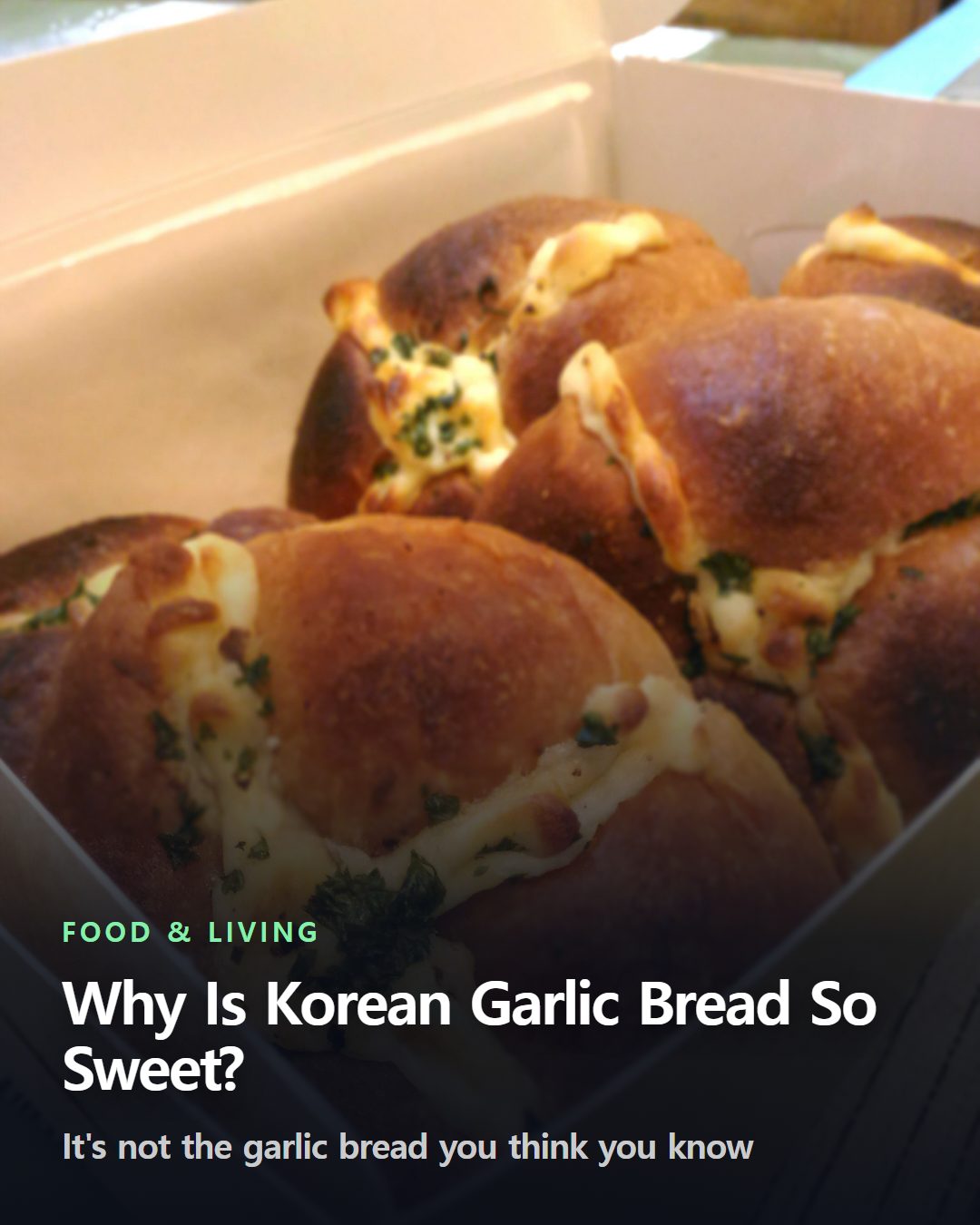
Korean bakeries sell something called 마늘빵 (maneul-ppang), or "garlic bread." It looks nothing like the version most international readers know. There's no baguette, no butter-and-herb spread toasted until crisp.
The short version
- Korean garlic bread is stuffed with sweet cream cheese, not butter and herbs.
- Korean bakeries favored sugar since Japan introduced bread during 1910–1945 colonial rule.
- The recipe started in Gangneung, then went viral in Seoul around 2019.
Instead it's a soft milk roll, cut into wedges, dunked in a custardy garlic butter, and stuffed with sweetened cream cheese. The first bite reads as savory. Then it's unmistakably, deliberately sweet.
That combination confuses a lot of first-time eaters. Garlic bread, in most food cultures, is a savory side dish. In Korea, it has become a street dessert, sold from bakery windows the way hotteok or fish-shaped waffle cakes are, eaten by hand, and photographed before it's actually eaten.
It didn't arrive that way. Korean bakeries built it into a dessert over roughly a decade, and the reasons behind the sweetness trace back further than the recipe itself.
A custard, not a spread
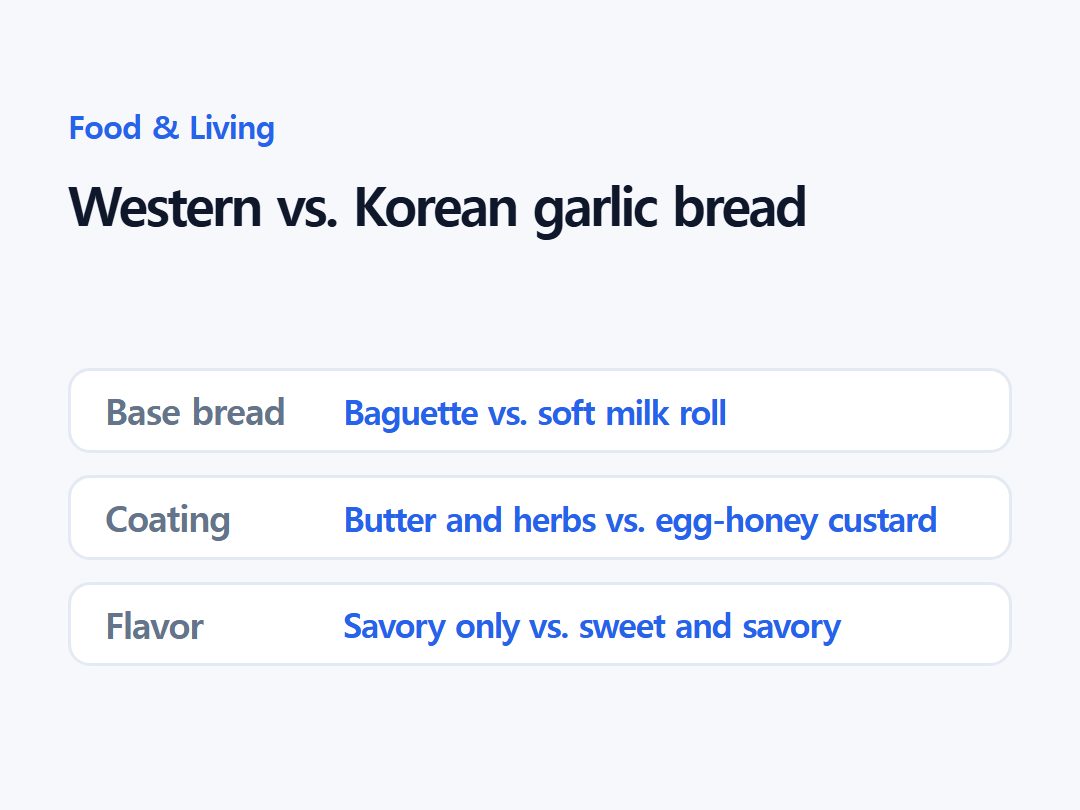
Western garlic bread is built from three things: bread, butter, and garlic, usually toasted until crisp. Korean garlic bread swaps the spread for something closer to a custard, with egg, milk, sugar, and honey whisked into the melted butter and garlic before the bread goes in.
The bread itself isn't a baguette but a soft, slightly sweet dinner roll, cut into six wedges without slicing through the base. This format is often sold as 육쪽마늘빵 (yukjjok maneul-ppang, "six-piece garlic bread"). Each wedge is packed with sweetened cream cheese, then the whole roll is dipped in the custard and baked a second time so the outside crisps while the inside stays soft.
Why does the sauce include so much sugar?
Ask why the sauce contains sugar and honey at all, and the answer isn't really about garlic bread. It's about what Korean bakeries have been selling since bread first arrived in the country.
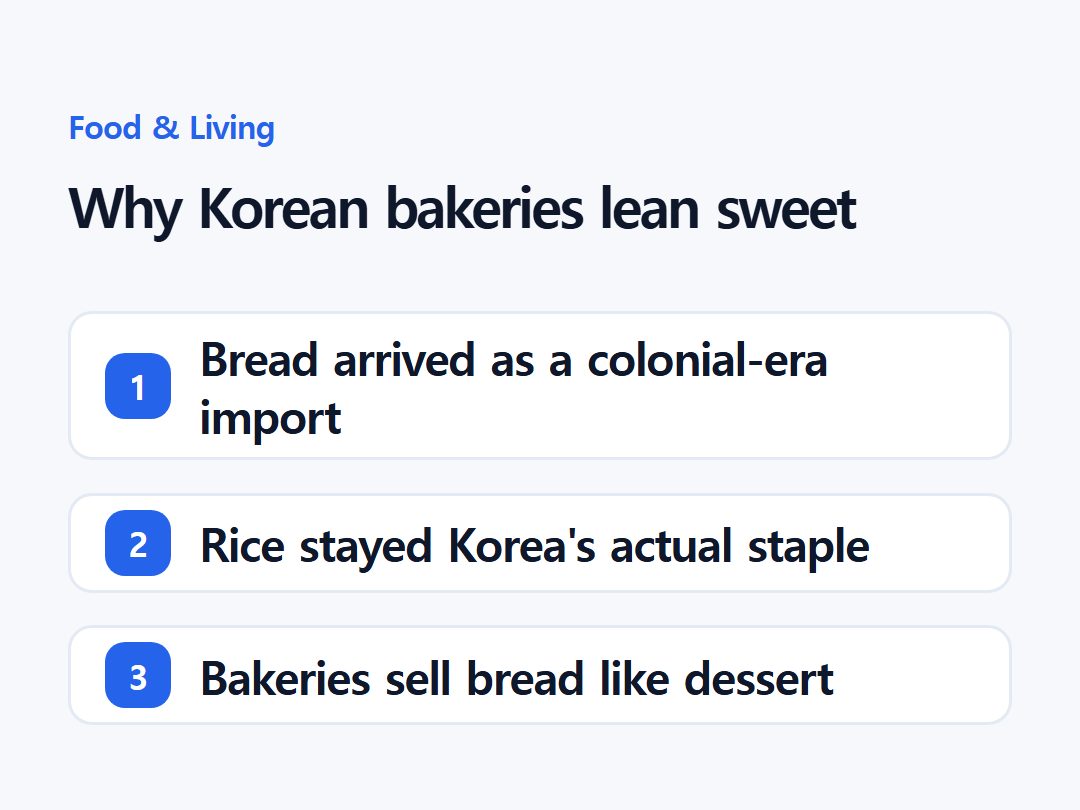
Bread reached Korea through Japan, which had adapted it from Portuguese traders centuries earlier. Japanese-run bakeries introduced it during the 1910–1945 colonial period, and it entered Korean daily life as a novelty item, not a meal.
Because rice was already the staple carbohydrate, bread never had to compete on nutrition. It could just be a treat, and Korean bakers, first under Japanese ownership and later on their own after 1945, leaned toward sugar rather than away from it.
Soboro-ppang set the sweet bakery template
The clearest example is soboro-ppang, a streusel-topped bun that took the same path garlic bread later would. The name comes from a Japanese word for crumbled or minced food, itself borrowed centuries earlier from a Portuguese word for flavor.
The sweet, peanut-studded version Koreans eat today took shape after 1945, when U.S. flour aid made bread cheap and widely available. Bakeries reworked it with local, sugar-forward tastes rather than sticking to the original Japanese formula.
Daejeon's Sungsimdang bakery, founded in 1956, is one of the oldest survivors of that era. It's still known for a fried version of soboro bread, and it remains a stop on Korea's modern bakery-tourism circuit.
American cooks made it rich, Koreans made it sweet
Garlic bread itself doesn't have one clean origin story either. The version most Americans grew up with is generally credited to Italian immigrants, who swapped in butter for the olive oil that was harder to find after they arrived in the United States.
So when Korean bakeries reworked garlic bread again decades later, they were adapting a dish that had already been adapted once. The direction each remix took just went differently: American cooks made it richer. Korean bakers made it sweeter.
Japan's melon bread stayed far less sweet
Soboro-ppang became a genuine national staple in Korea. In Japan, a nearly identical bun called melon bread took its place instead, using the same streusel technique but far less sugar.
That gap between the two countries' bakery habits never closed. It's still visible in every sweet Korean bread sold today, garlic bread included, decades after soboro-ppang set the template.
Korean bakeries function as dessert counters, not bread shops
Because bread was never a rice substitute, Korean bakeries function more like dessert counters than bread shops. Cream-filled buns, red bean pastries, and sugar-glazed rolls dominate the display case, not sourdough loaves.
Garlic bread fits that case more naturally than it first appears to. Framed as a snack rather than a side dish, it makes sense that a Korean bakery would sweeten it the same way it sweetens almost everything else on the shelf.
This instinct also predates Western bread entirely. Korea has a long tradition of sweet grain confectionery called hangwa, made with flour, honey, and sugar syrup centuries before bakeries existed. Modern bread shops inherited that sweet tooth as much as they inherited baking technique from Japan.
From Gangneung bakeries to viral Seoul cafes
The specific version now sold worldwide traces back to bakeries in Gangneung, a city on Korea's east coast in Gangwon Province better known internationally for its coffee shops and beaches. Local bakeries there, including Pain Famille, are credited with developing the six-wedge, cream-cheese-stuffed format that became the template.
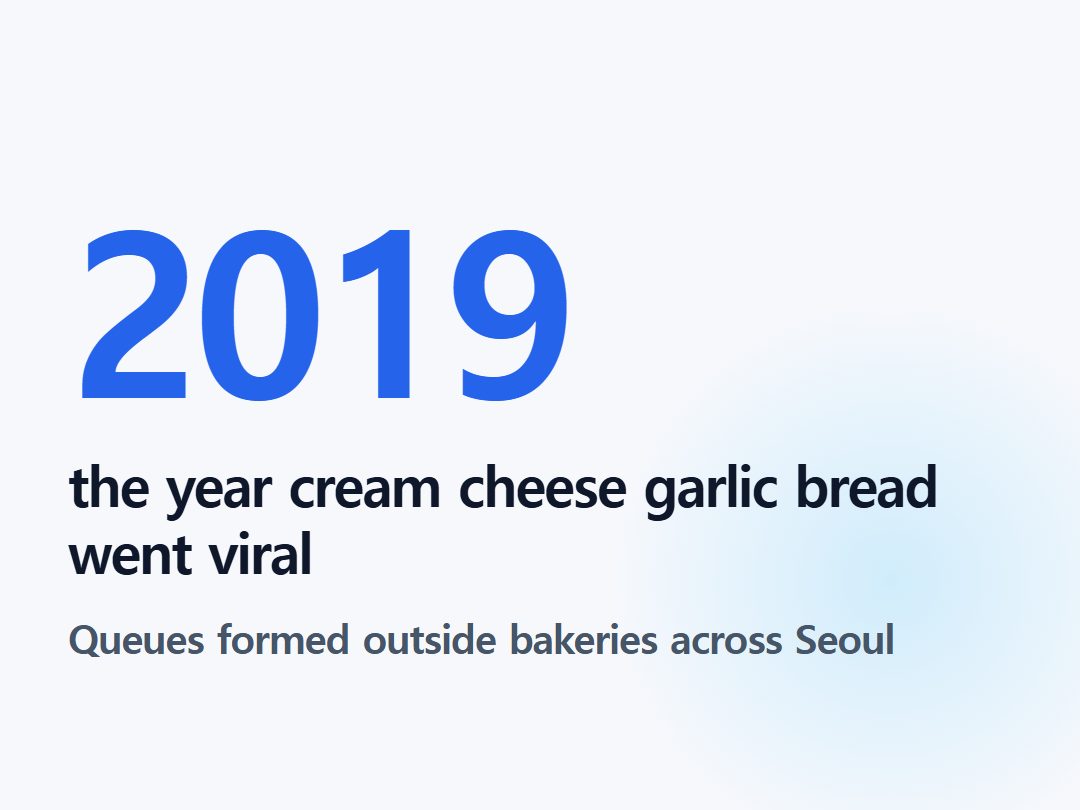
From Gangneung, the bread moved to Gangnam, Seoul's trend-setting district, where cafes picked it up in the late 2010s. It went properly viral around 2019, when queues began forming outside bakeries selling it.
Mandong Bakery, another Gangneung-founded shop known for its garlic bread, later opened Seoul branches in Yeonnam-dong and, in 2023, Seongsu-dong, chasing the same demand.
Other Korean street snacks got sweeter too
Garlic bread's evolution into a street dessert isn't an isolated case. It follows a pattern already set by older Korean street snacks, each of which started plain and picked up sweeter, more elaborate fillings over time:
- Hotteok, a fried pancake once filled only with brown sugar, now also made with cream cheese, chocolate, or matcha
- Bungeoppang, a fish-shaped, red-bean-filled waffle cake now sold with custard or croissant dough
- Gyeran-ppang, an egg bread reportedly traced to a single Incheon shop opened in 1984, now a nationwide winter staple that CNN named one of the world's 50 best breads
Each snack absorbed more elaborate fillings as bakeries competed for attention, first from foot traffic, later from Instagram and TikTok.
Is Korean garlic bread getting more expensive?
Korea's bakery scene is organized enough now to have its own term: 빵지순례 (ppangji sullye), or "bread pilgrimage," the practice of traveling specifically to try a bakery's signature item. Garlic bread is one of the snacks that put small-city bakeries like Gangneung's on that map.
Domestically, the appetite isn't slowing down. Navigation data from Tmap Mobility found that four of the ten most-searched restaurants during Korea's 2024 summer travel season were bakeries, not restaurants serving meals.
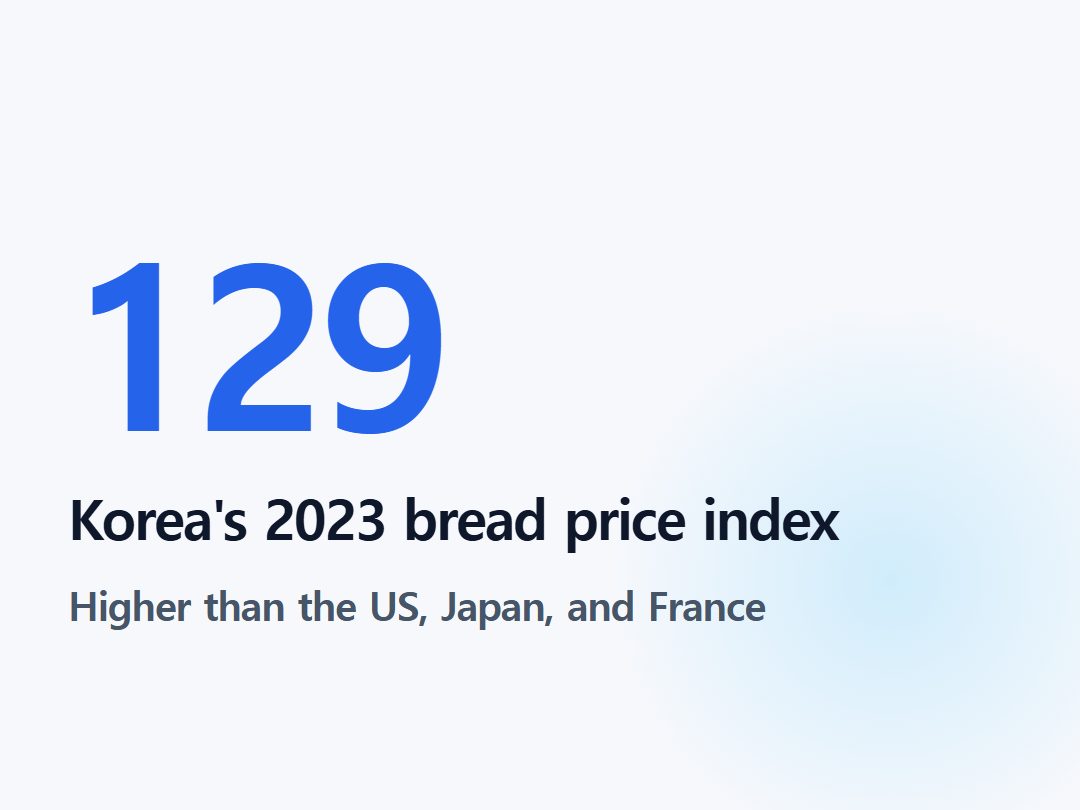
That popularity has a cost. Korea's bread price index reached 129 in 2023, higher than the United States, Japan, or France, and staple bakery items such as bagels and salt bread rose 30 to 44 percent over three years, according to Korea Times reporting.
The trend has also crossed borders. Home bakers and cafes in Singapore and the Philippines have picked up cream cheese garlic bread over the past few years, generally keeping the sweetened filling intact even when the surrounding bread changes.
Whether the snack stays a modestly priced street item at home or gets pulled into that same premiumization is still unresolved. What's already settled is the flavor logic behind it: as long as Korean bakeries keep treating bread as something closer to cake, garlic bread will keep coming out sweet.
A side-by-side look at three sweeter snacks
| Snack | Started as | Now also includes |
|---|---|---|
| Hotteok | Fried pancake filled only with brown sugar | Cream cheese, chocolate, or matcha |
| Bungeoppang | Fish-shaped, red-bean-filled waffle cake | Custard or croissant dough |
| Gyeran-ppang | Egg bread from one Incheon shop (1984) | Nationwide winter staple, CNN top-50 bread |
Frequently asked
Why is Korean garlic bread sweet?
Since bread entered Korea through Japanese colonial-era bakeries (1910–1945) as a treat rather than a rice substitute, Korean bakers leaned toward sugar, a habit that carried into the custardy garlic butter and sweetened cream cheese filling.
Where did Korean garlic bread (마늘빵) originate?
The six-wedge, cream-cheese-stuffed format was developed by bakeries in Gangneung, including Pain Famille, before spreading to Seoul's Gangnam cafes and going viral around 2019.
What is 육쪽마늘빵?
It's "six-piece garlic bread": a soft milk roll cut into six wedges, packed with sweetened cream cheese, then dipped in an egg-milk-sugar-honey custard and baked.
Sources
Every factual claim above is traceable. We do not translate articles — we gather facts from multiple outlets and write them ourselves.
- Korean Cream Cheese Garlic Bread — Bake-Street
- Korean Cream Cheese Garlic Bread — Takes Two Eggs
- Korea's bread pilgrimage: From bagel queues to city pride — The Korea Times
- Korea's gyeran-ppang named one of world's 50 best breads by CNN — The Korea Times
- 소보로빵 (Soboro Bread) — NamuWiki
- 2024 Best Garlic Bread Bakeries of Seoul: Mandong Bakery — Local Bites Korea


