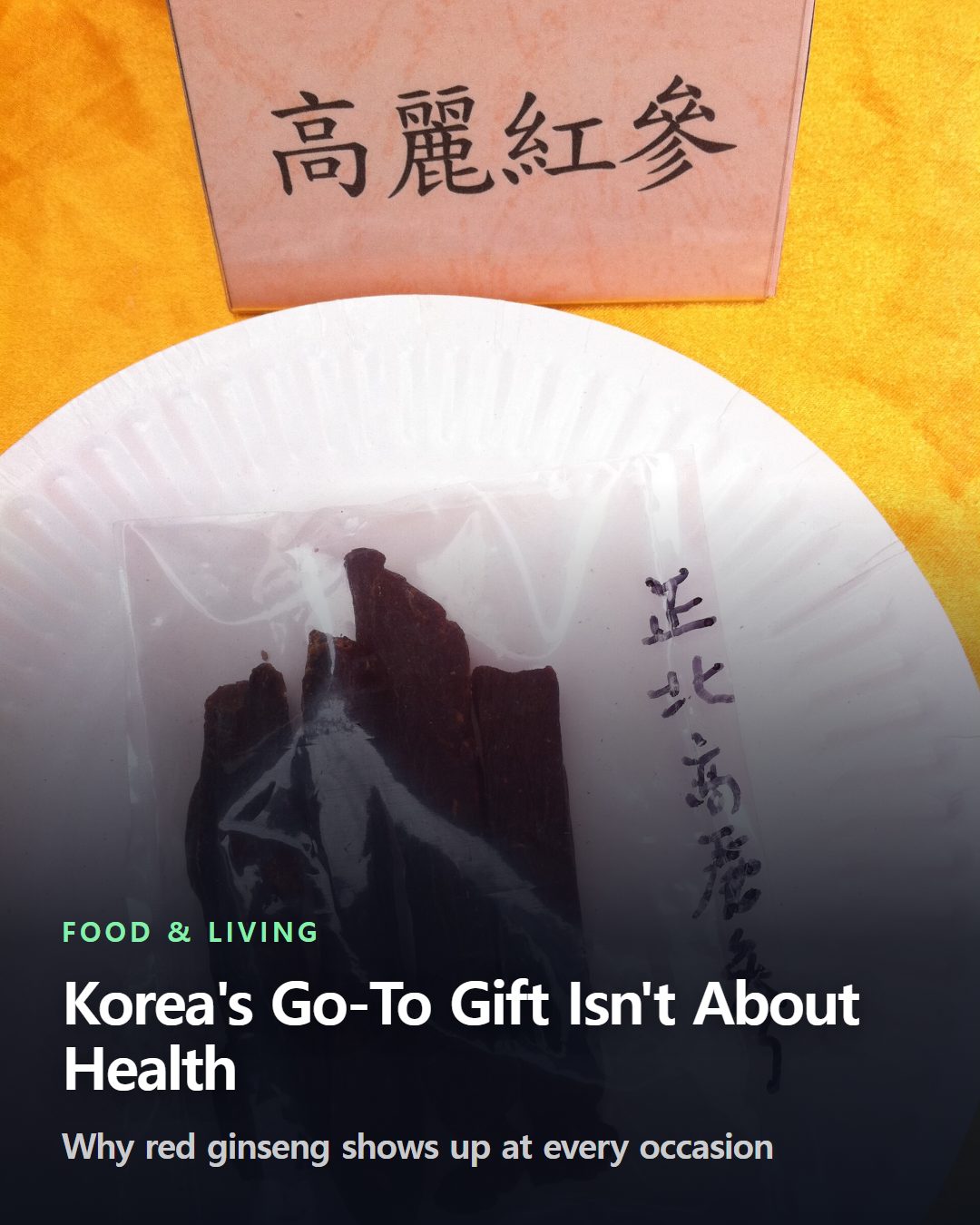
Every autumn, when Chuseok (Korea's harvest holiday) approaches, and again every January before Seollal (the Lunar New Year), Korean department stores turn entire floors over to boxed sets of red ginseng: glass bottles of extract, individually wrapped daily packets, or dried roots in wooden cases. The boxes sit next to premium beef and fruit, priced anywhere from about 30,000 won to well over 300,000 won.
The short version
- Red ginseng is Korea's default gift, not a proven medicine.
- Health foods outsold beef and seafood in 2020 Chuseok gift sales.
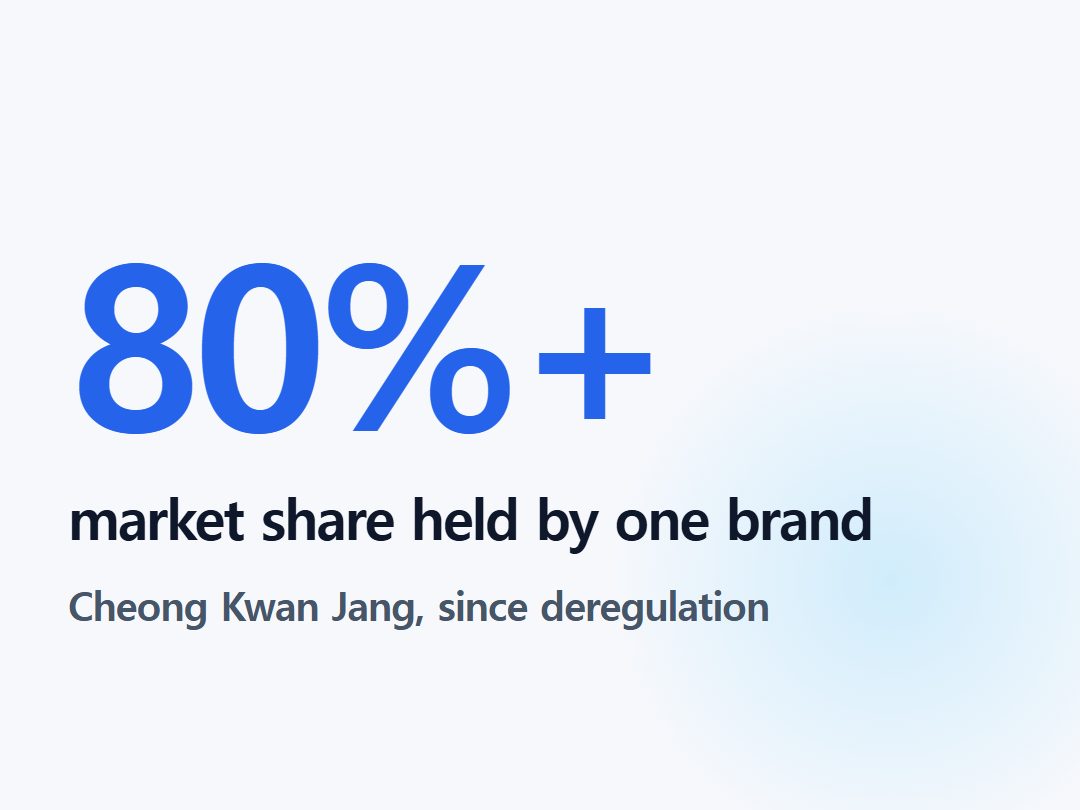
- One brand, Cheong Kwan Jang, holds over 80% of the market.
These sets are rarely marketed as medicine. They are marketed as gifts — for parents, in-laws, bosses, sick colleagues, and children about to sit a major exam. That distinction is most of the story international coverage tends to skip.
The gift that quietly outsells beef and seafood online
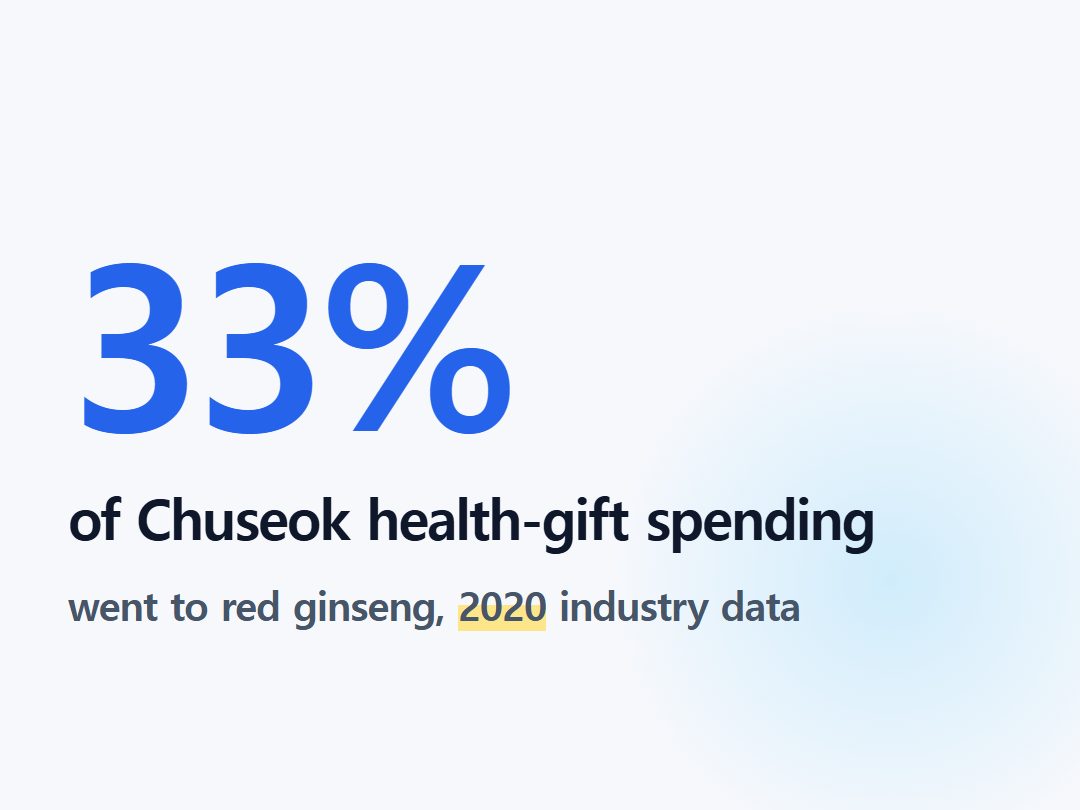
In one industry tally of the 2020 Chuseok gift season, health functional foods made up 41% of online gift-set sales — more than traditional categories like meat or seafood — and red ginseng products accounted for 33% of that health-food spending on their own.
The pattern hasn't reversed since. As of 2024, red ginseng remained one of Korea's top-selling health functional food categories, alongside vitamins and probiotics; together the three made up 72% of the entire market that year, according to a U.S. Department of Agriculture market brief on Korea.
A ritual object more than a medicine
Ask a Korean shopper why they bought red ginseng and the honest answer is rarely "the research convinced me." It's closer to: this is what you buy when you want to signal concern for someone's health without saying it out loud.
That's the nuance foreign coverage often misses. Red ginseng gets introduced abroad as a folk remedy with clinical backing. Inside Korea, it functions primarily as a social script — a pre-approved way to perform care for an elder, a patient, or a stressed teenager, regardless of whether the buyer has ever read a study on it.
Every relationship has its own red ginseng format
The format changes with the occasion, not the ingredient:
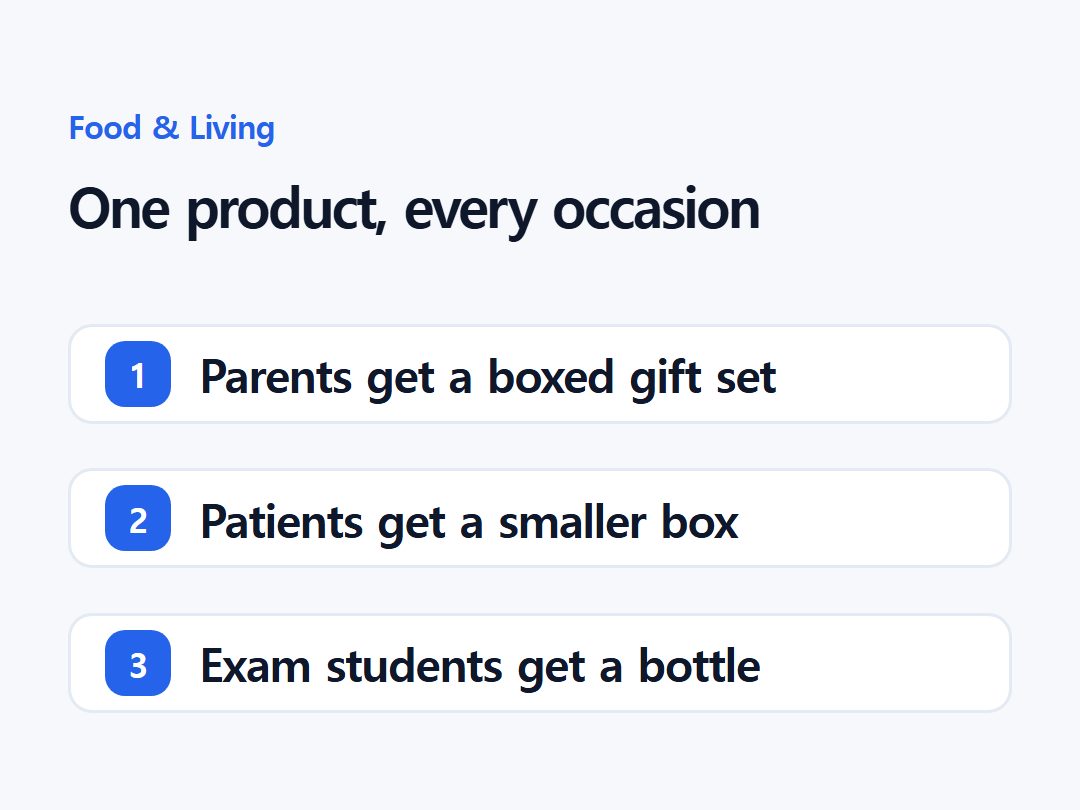
- For parents and in-laws at Chuseok or Seollal, a boxed set of extract bottles or aged roots, wrapped and bagged for display.
- For a hospitalized colleague or relative — under a custom called byeongmunan, or hospital visiting, which Koreans treat as close to obligatory even toward people they don't know well — a smaller box of ginseng or a vitamin drink.
- For a child before suneung, the single-day national exam that largely determines university admission, a bottle of concentrated extract meant to help them get through exam week.
What stays constant is the message, not the dose: the product exists to be handed to someone else, not consumed by the giver.
The government approval that doesn't settle the science
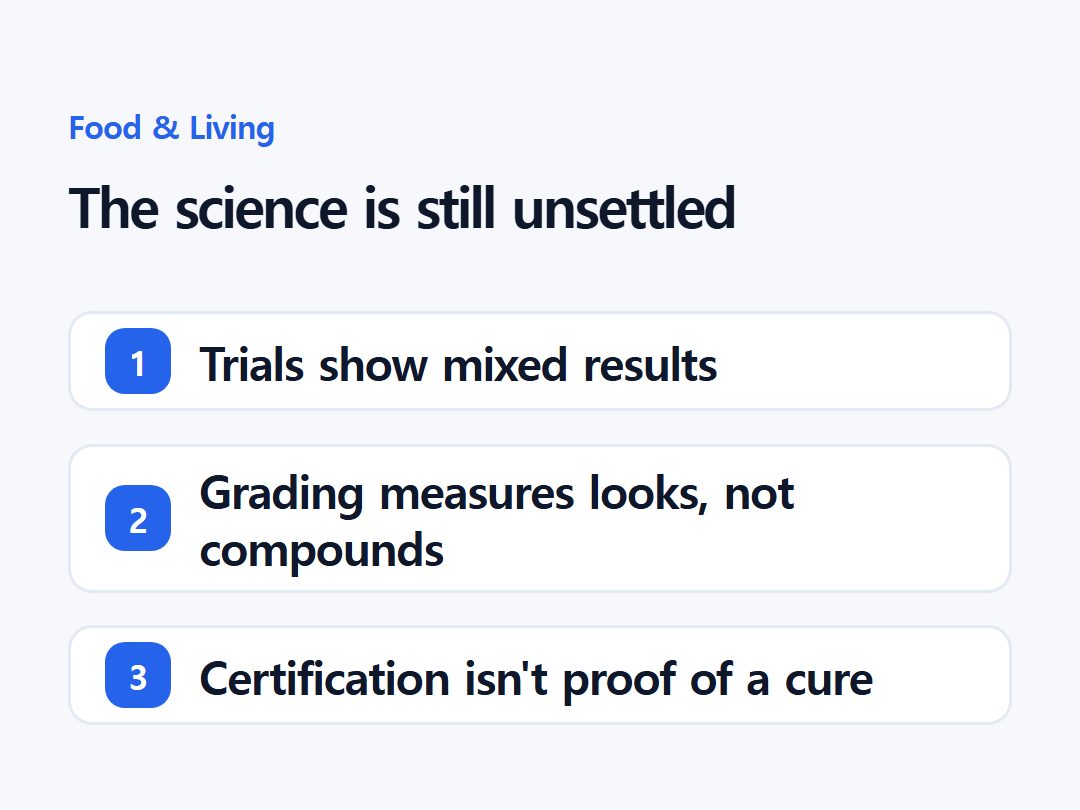
Korean red ginseng products can legally carry claims like "supports immune function" because they hold health functional food certification from Korea's food and drug regulator — an approval process that runs two to three years and can cost $50,000 to $200,000 per claim.
That certification is real, but it isn't the same as scientific consensus. A 2016 meta-analysis in the Journal of Korean Medical Science, covering 659 participants across trials run in Korea, the U.S., Iran, Thailand, and Poland, found the evidence for ginseng's fatigue-reducing effects inconsistent.
A separate systematic review of Korean-language clinical trials concluded there still wasn't sufficient clinical evidence for ginseng's health benefits overall, even though individual pharmacological effects are well documented in lab and animal studies.
Some trials do show measurable effects — a randomized, placebo-controlled study of 100 healthy adults recorded shifts in T-cell and B-cell counts after eight weeks of red ginseng extract. But "some trials show an effect" and "this is a proven cure" are different claims, and Korea's gift-giving custom has never waited for the second one.
A stamp that was originally meant to catch counterfeiters
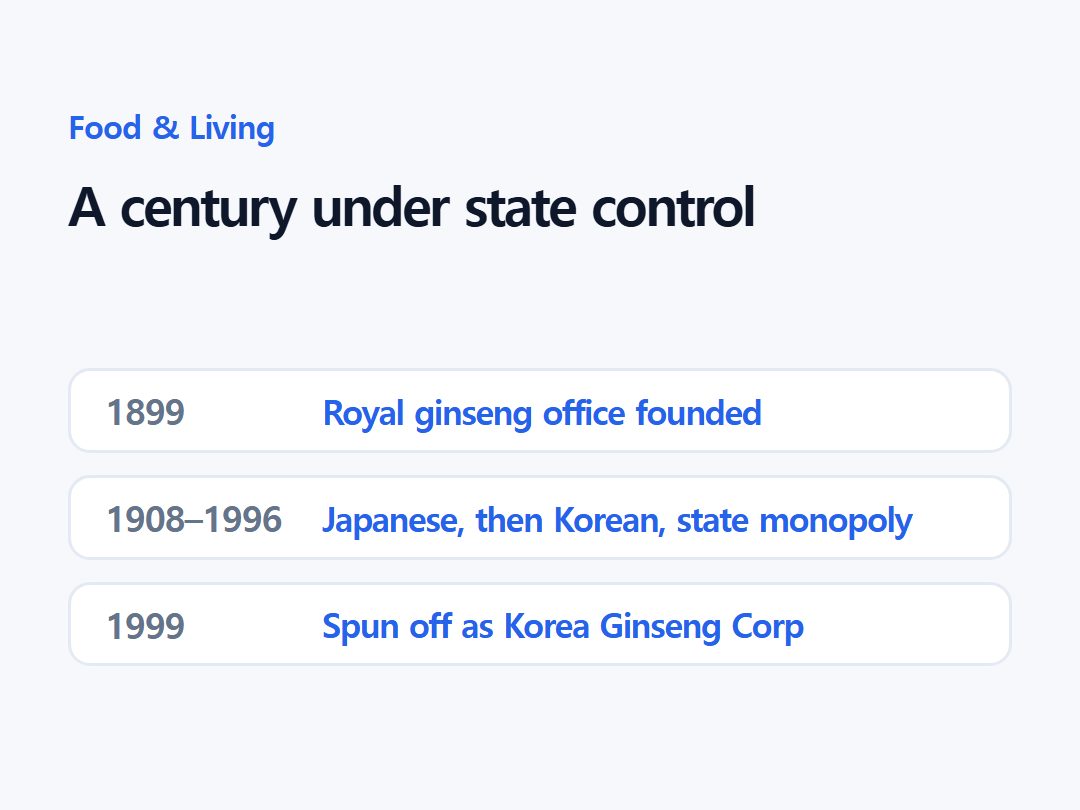
The best-known red ginseng brand name, Cheong Kwan Jang, translates roughly to "officially inspected." It wasn't invented by a marketing team. It was a label Japan's colonial-era Monopoly Bureau began stamping onto ginseng packaging in 1908, as Tokyo tightened its grip over Korea's finances in the years before formal annexation in 1910, so buyers could distinguish state-processed root from counterfeits.
By the mid-1990s, the mark had become trusted enough that the company applied it to every ginseng product it sold, domestic and export alike. The authentication stamp had turned into the brand itself.
From a palace tribute office to a state monopoly that outlived colonial rule
Ginseng's tangle with the state runs deeper than one brand name. Through most of the Joseon dynasty (1392–1910), merchants from the city of Kaesong controlled the ginseng trade, exporting wild and steamed root to Qing-dynasty China as tribute and turning it into one of Korea's few internationally recognized goods.
In 1899, the royal government of the Korean Empire formalized that trade into a state department, the Ginseng Management Division — the direct institutional ancestor of today's Korea Ginseng Corporation. When Japan's Ministry of Finance absorbed Korean ginseng administration in 1908, private production was banned outright, and the resulting monopoly law stayed in force long after Korean independence in 1945.
Deregulation in 1996 barely loosened one company's grip
The state didn't give up its red ginseng monopoly until 1996. Three years later, the ginseng division was spun off as Korea Ginseng Corporation, a subsidiary of the newly public Korea Tobacco & Ginseng Corporation, which fully privatized as KT&G in 2002.
Nearly three decades after deregulation, the market looks far less competitive than the law implies. KGC's Cheong Kwan Jang brand has long held an estimated 80%-plus share of Korea's red ginseng market — private-sector dominance that simply replaced the old state monopoly rather than breaking it up.
A grading system that measures appearance, not the active ingredient
Korean red ginseng is sold by root age and grade. Buyers look for the "6-year-root" label, and government-trained inspectors sort roots further into cheon, ji, and yang grades. Those grades are assigned largely on visible traits:
- root density and firmness
- size and overall weight
- presence of internal cavities or discoloration known as "inner white"
A peer-reviewed comparison of graded six-year roots found that physical grade tracked appearance reliably, but did not reliably track ginsenoside content — the class of compounds researchers actually study for pharmacological effect. The grading system Korean shoppers use to judge a "good" ginseng gift, in other words, wasn't built to measure the thing its reputation rests on.
Inflation is shrinking the box, not the ritual
The custom is adapting to price pressure rather than disappearing. Ahead of Chuseok 2026, Lotte, Shinsegae, and Hyundai department stores each expanded their lineup of lower-cost "value" gift sets by roughly 30–40% compared with the year before, trimming portion sizes and diversifying suppliers to hold down prices as consumer prices ran about 2.8% higher year-over-year.
Red ginseng sets didn't disappear from the discount tier — they got smaller pouches and shorter courses, the same compromise applied to beef and seafood boxes that holiday.
Whether the youngest generation keeps buying into the ritual
The one part of the tradition that looks genuinely unsettled is the exam-season gift. Red ginseng extract was long a default present for students finishing suneung. Recent department-store surveys of graduating students found their top requested gifts are now laptops and tablets, not health tonics — a shift from the dress shoes and suits once given a generation earlier, and a quiet drop for ginseng specifically.
Whether that shift spreads to holiday and hospital gifts — occasions where the giver, not the recipient, chooses the item — remains an open question. For now, red ginseng's grip on those older, hierarchy-driven occasions hasn't loosened the way its grip on teenagers already has.
Red ginseng gift formats by occasion
| Occasion | Recipient | Typical Format |
|---|---|---|
| Chuseok / Seollal | Parents and in-laws | Boxed set of extract bottles or aged roots |
| Hospital visit (byeongmunan) | Colleague or relative | Smaller box of ginseng or a vitamin drink |
| Suneung exam | Child or student | Bottle of concentrated extract |
Frequently asked
Does red ginseng actually have proven health benefits?
Evidence is mixed: a 2016 meta-analysis of 659 participants found inconsistent results for fatigue, though a separate trial recorded T-cell and B-cell changes after eight weeks of use.
Why is Cheong Kwan Jang the top ginseng brand in Korea?
Its name means "officially inspected" and comes from an anti-counterfeiting stamp Japan's colonial Monopoly Bureau started using in 1908; the brand now holds an estimated 80%-plus share of Korea's market.
What does a 6-year-root grade actually measure?
Grades like cheon, ji, and yang are based on visible traits such as density, size, and discoloration — a study found they track appearance reliably but not ginsenoside content, the compound studied for pharmacological effect.
Sources
Every factual claim above is traceable. We do not translate articles — we gather facts from multiple outlets and write them ourselves.
- Korea Ginseng Corporation — Wikipedia
- History of KT&G Corporation — FundingUniverse
- Trailing the History of Korean Ginseng (Panax ginseng C.A. Meyer) — Food Science and Biotechnology History (e-fsbh.org)
- Efficacy of Ginseng Supplements on Fatigue and Physical Performance: a Meta-analysis — Journal of Korean Medical Science
- Ginseng for Health Care: A Systematic Review of Randomized Controlled Trials in Korean Literature — PMC / NIH
- Immuno-enhancement effects of Korean Red Ginseng in healthy adults: a randomized, double-blind, placebo-controlled trial — Journal of Ginseng Research (ScienceDirect)
- Comparison of external, internal and chemical quality characteristics of 6-year-old red ginseng produced in Punggi area by grade — Korean Journal of Food Preservation
- Health Functional Food and Supplements: Market Brief for the Republic of Korea — USDA Foreign Agricultural Service (GAIN Report)
- Red ginseng selected as the most popular Chuseok (Korean Thanksgiving day) gift in Korea — PR Newswire APAC
- Korea's Top 3 Department Stores Open Chuseok Gift Presales — Seoul Economic Daily
- A Guide To Gift Giving In Korea: From Weddings To Housewarming Parties — The Soul of Seoul


