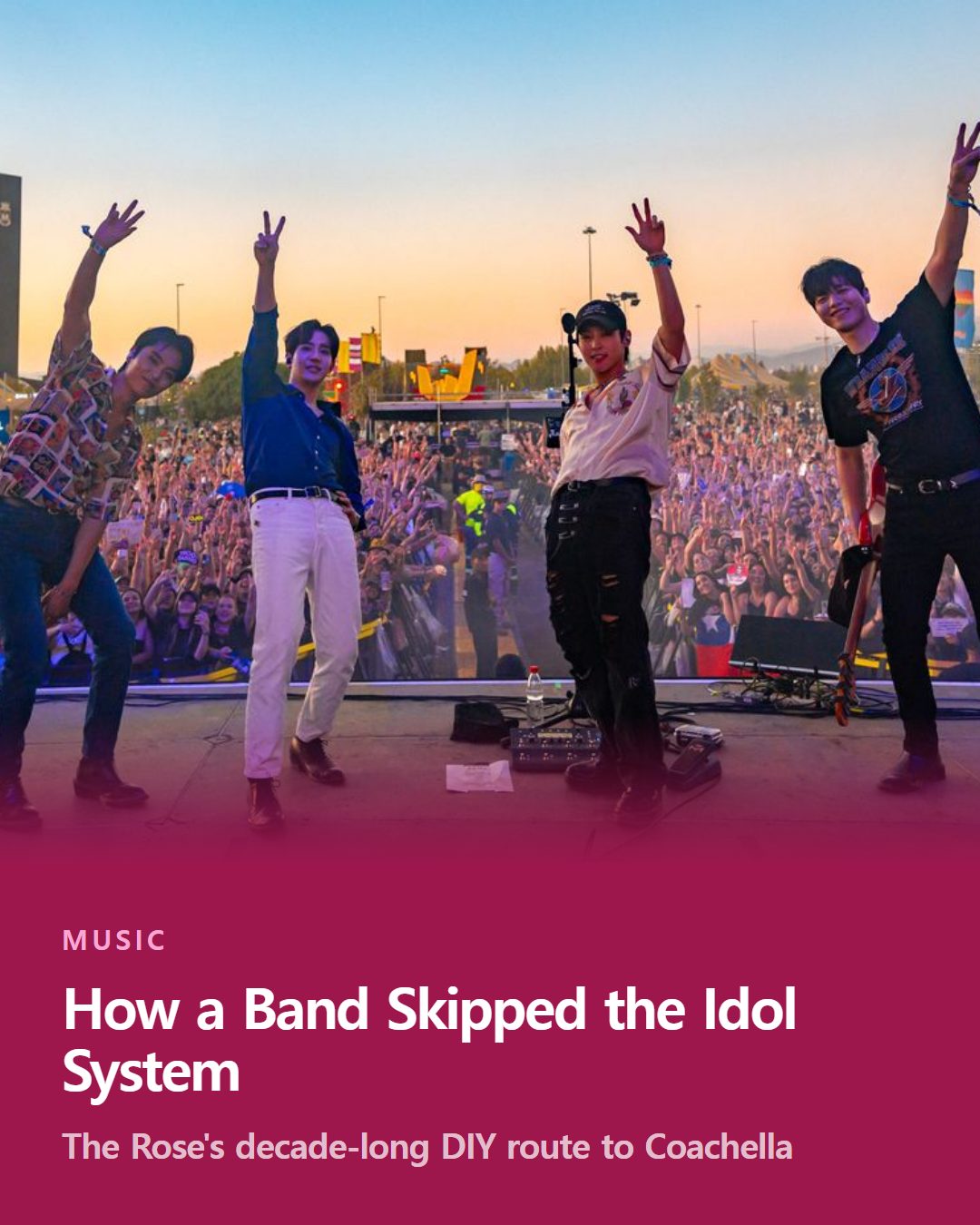
The Rose spent its final year as a full-time band on some of the biggest stages in global rock — Coachella, Lollapalooza, sold-out rooms across Latin America and Europe — before announcing a hiatus in April 2026. That trajectory is unusual for a Korean act, because The Rose never went through the training system that produces most of the country's music exports.
The short version
- The Rose skipped Korea's trainee system and formed while busking in Hongdae.
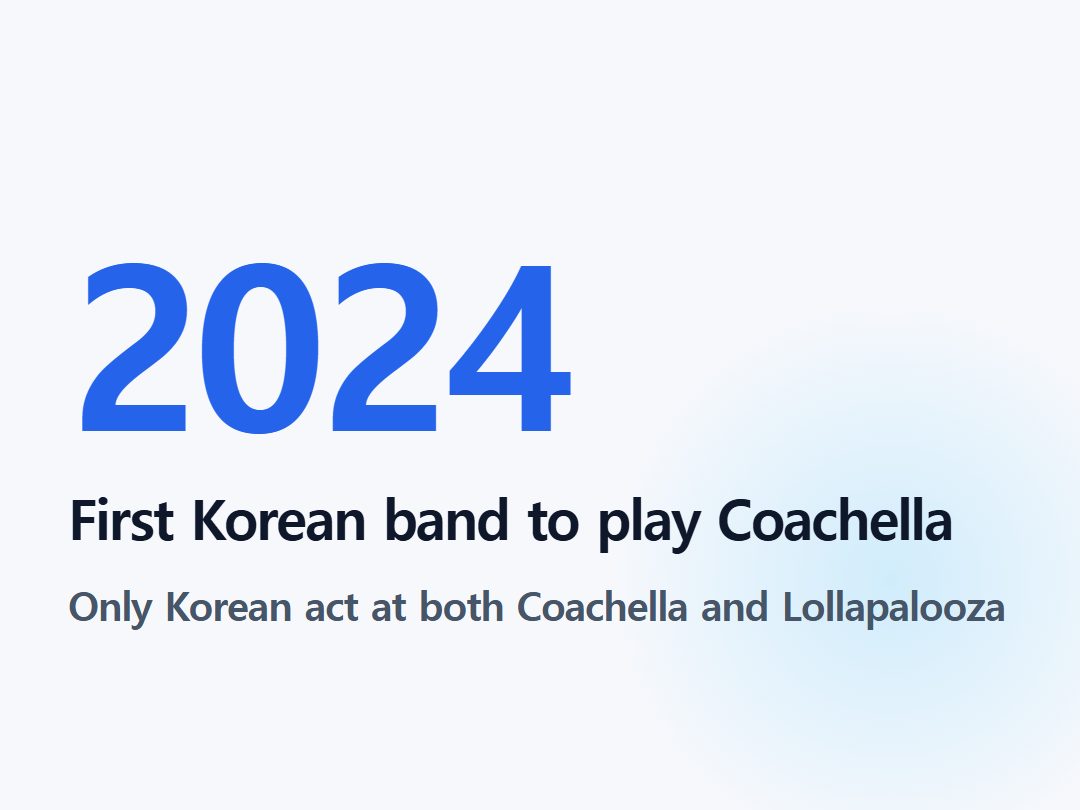
- They're the only Korean act to play both Coachella and Lollapalooza.
- A 2020 lawsuit against their agency won them creative control by 2021.
The band writes its own songs, plays its own instruments, and built its overseas following without a major entertainment company behind it for most of its career. To international rock fans, that might sound unremarkable. To anyone who understands how the Korean music industry usually works, it's most of the story.
Four buskers from Hongdae ended up at Coachella
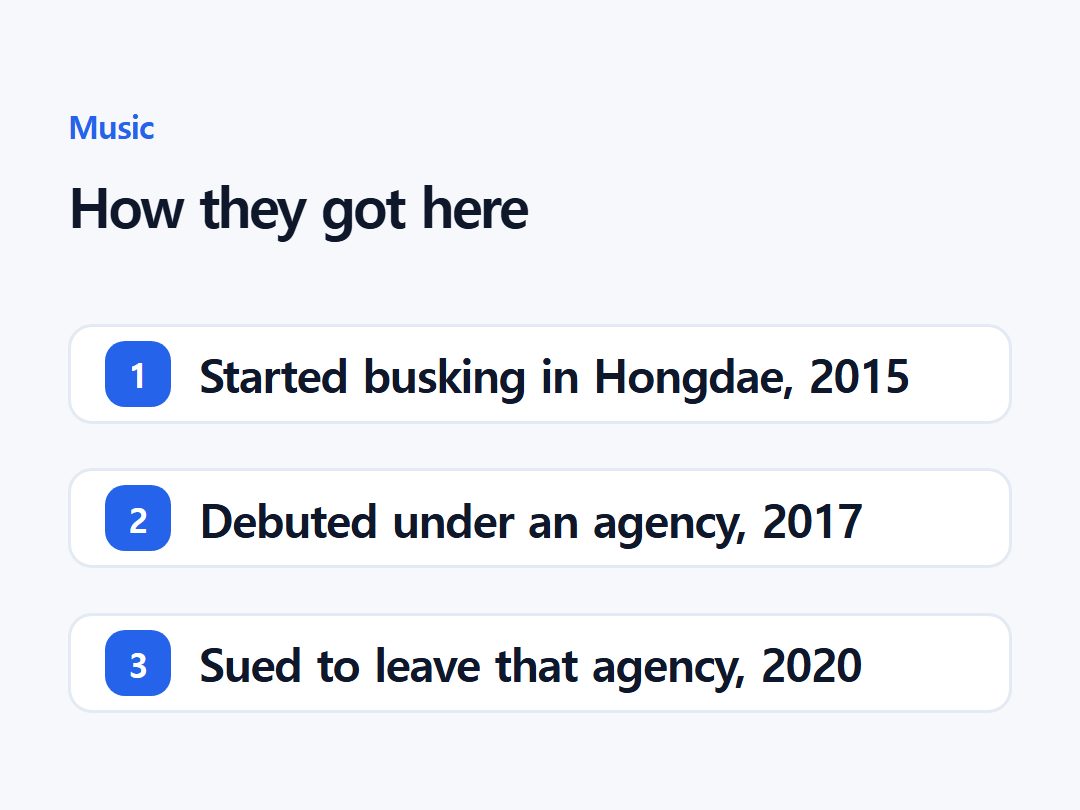
Vocalist and guitarist Kim Woosung, keyboardist and guitarist Park Dojoon, drummer Lee Hajoon and bassist Lee Taegyeom (then performing under the name Lee Jaehyeong) met performing on the streets of Hongdae, Seoul's university and indie-music district, between 2015 and 2016. They debuted as The Rose under J&Star Company on August 3, 2017, with the single "Sorry."
By April 2024 they were the first Korean rock band to play Coachella, appearing on the festival's Outdoor Theatre stage across both weekends. They are the only Korean act to have played both Coachella and Lollapalooza — the latter first in Chicago in 2023, then in:
- Buenos Aires, Argentina
- Santiago, Chile
- São Paulo, Brazil
- Stockholm, Sweden
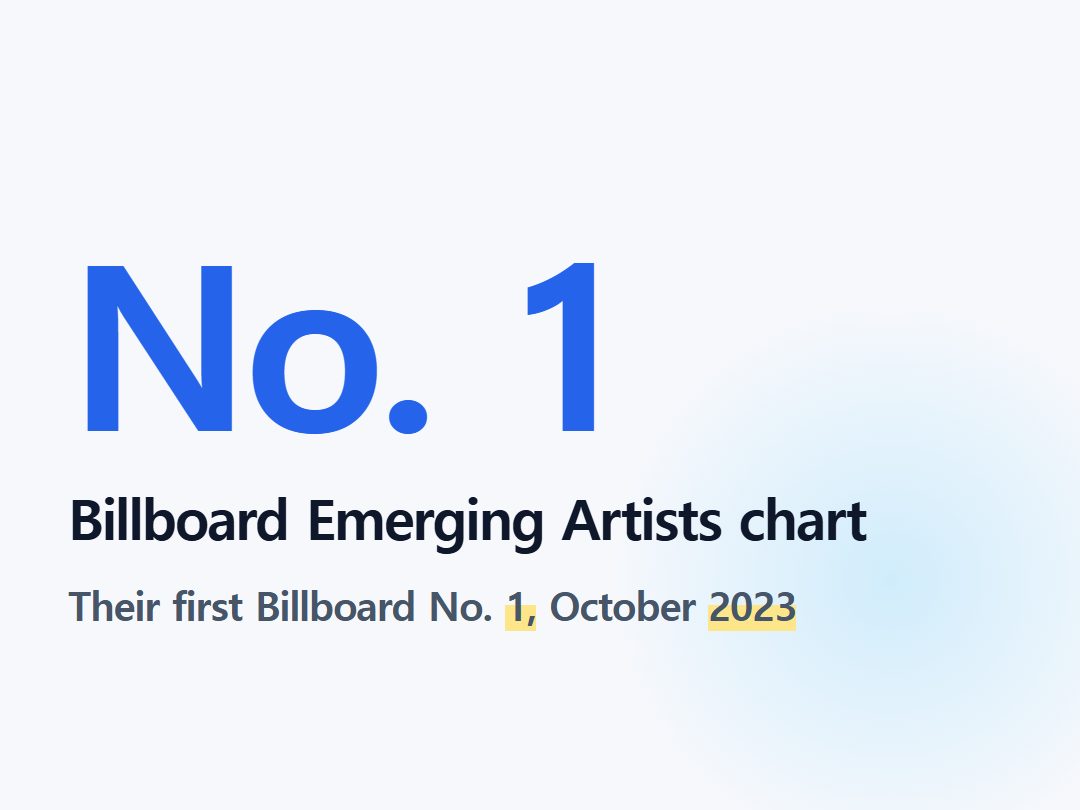
Their 2023 album "Dual" gave them their first Billboard chart No. 1, topping the Emerging Artists ranking that October and reaching No. 83 on the Billboard 200 — a modest position on paper, but a first for a Korean rock act without a major label behind it.
None of that happened overnight. Their debut single "Sorry" found an early audience in Europe, and their first European tour reportedly sold out before the band had built a comparable following at home — a reversal of the usual pattern, where a Korean act typically breaks domestically before touring abroad.
Idol groups are built to spec; this band was not
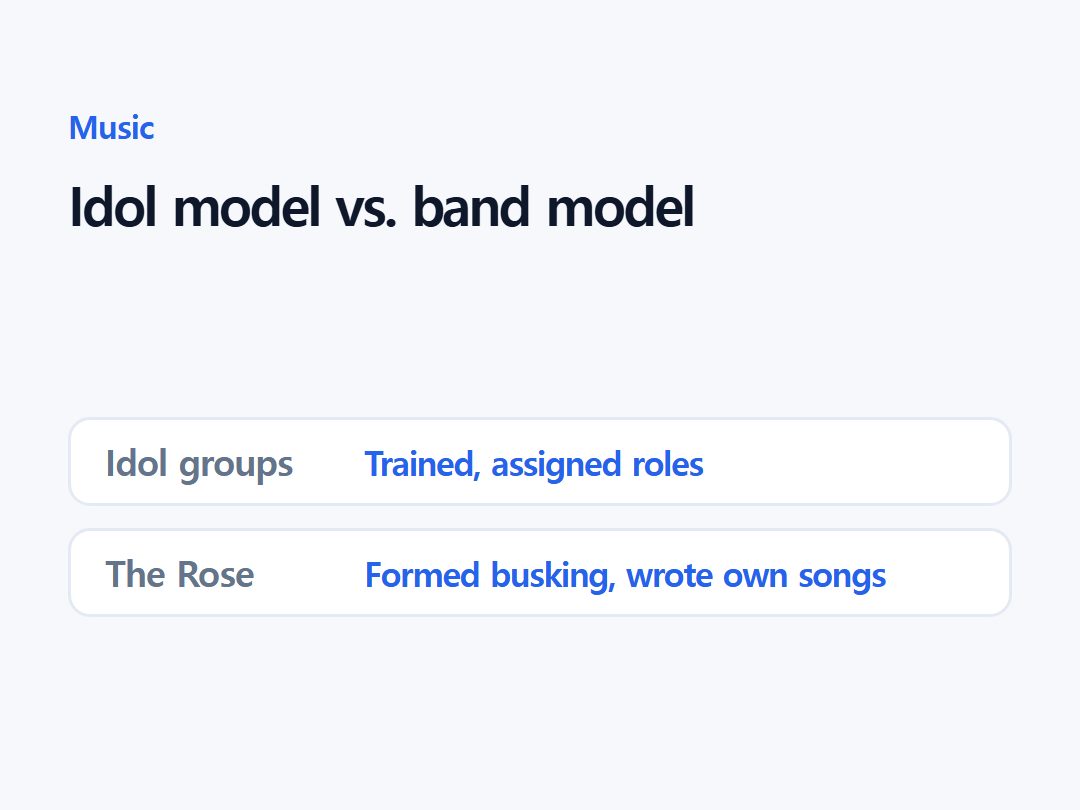
Most Korean pop acts begin as trainees — teenagers recruited by an agency, put through years of vocal, dance and language lessons, then debuted as a group whose roles (visual, main vocalist, rapper) are assigned before the members ever perform together. This is often called the agency system.
Woosung and Dojoon had both spent time as trainees at DSP Media, the agency behind Kara and Rainbow, but left before debuting. They met Hajoon and Taegyeom independently while busking, and the four operated as a self-organized act, first under the name Windfall, before any company signed them.
Agency contracts in Korea have historically run for years at a time, giving the company broad control over an act's schedule, image and earnings until the term ends. Disputes over those terms have produced some of the industry's most public lawsuits, and The Rose's later exit from J&Star Company put them in that same category.
| Typical idol debut | The Rose's path |
|---|---|
| Recruited and trained by an agency | Formed independently while busking |
| Songs written by in-house producers | Members write, compose and produce |
| Choreography set by the company | Live instruments, no choreography |
Rock festivals book bands, not idol acts
International rock festivals rarely put K-pop idol acts on their main lineups, largely because those acts are built around choreographed pop performance rather than a band playing its own instruments live.
The Rose's sets — built around guitar solos, live drumming and Woosung's raspy vocal delivery — read to festival programmers as a rock act, not a K-pop import. Their 2024 Coachella slot drew comparisons to alternative rock acts, even though that year's lineup also included the idol groups ATEEZ and Le Sserafim.
The booking came after years of smaller festival dates that built the same credibility: Mad Cool in Spain, Main Square in France, and Life Is Beautiful in Las Vegas all had the band on the bill before Coachella or Lollapalooza did. Each of those slots came from rock and alternative programmers, not K-pop-specific stages.
A 2020 lawsuit against their agency bought them creative control
On February 28, 2020, The Rose filed to terminate their contract with J&Star Company, citing unpaid earnings since their 2017 debut and a lack of consultation over scheduling, including a planned 17-city U.S. tour. J&Star denied the claims and threatened its own legal action.
A South Korean court denied the termination request that August. The dispute dragged on for another year before it was settled and the members parted ways with the agency in 2021 — a resolution Woosung later described simply as "figured out."
In May 2022, Woosung announced the band's own label, Windfall, giving the group ownership of a much larger share of its own output.
Military service split the band for two years — except for one member
South Korea requires most able-bodied male citizens to complete roughly 18 months of military duty, generally before turning 30. It has shaped release schedules for nearly every Korean boy group, and The Rose was no exception: Dojoon enlisted in July 2020, followed by Hajoon and Taegyeom.
Woosung, who holds U.S. citizenship, was not required to serve. He used the gap to release his debut full-length solo album, "Genre," in December 2021 — one reason the band's later choice to keep releasing music as a unit, rather than pursuing separate solo careers, reads as deliberate rather than default.
Their self-run label just changed its name — to an Egyptian hieroglyph
In 2026, the band rebranded Windfall as AKHET, named for the ancient Egyptian symbol for the horizon — the point where the sun sets and, eventually, rises again. Distribution and marketing still run through the U.S.-based Transparent Arts, the band's partner since 2022.
The rebrand landed alongside a new album, "ROSE," and a tour titled "ROSETOPIA," which the band has framed as the closing chapter before a break rather than a farewell.
A Hybe-backed documentary complicates the DIY story
In 2026, the documentary "The Rose: Come Back to Me," directed by Eugene Yi, premiered at the Tribeca Festival and sold out its screenings. It frames the band's rise as happening largely outside the agency system, tracking the members' path from busking to global venues rather than a conventional trainee bootcamp.
One of its producers is Hybe America, the U.S. arm of the company behind BTS and Seventeen. That backing doesn't contradict The Rose's independent history, but it is a reminder that "independent" in the Korean music industry rarely means fully disconnected from the companies that dominate it.
What the hiatus leaves unresolved
The band has described the break, announced in April 2026, as a pause rather than a breakup — a decision it has framed as deliberate, unlike the military-service gap that separated the members in 2020. Drummer Hajoon has said he plans to release solo material during the pause.
The "ROSETOPIA" tour began on June 5, 2026, and its rollout was complicated when Woosung was treated for a vocal nodule; he has since recovered. Fans on that tour heard several new songs from "ROSE" performed live before the album's official release.
What isn't yet public is how long the break will last, or whether the members will keep releasing music under AKHET individually. It's also unclear whether The Rose's model — a self-managed band writing and touring on its own terms — is a template other Korean acts can copy, or a result of circumstances that are difficult to repeat.
Idol system vs. The Rose's path
| Typical idol debut | The Rose's path |
|---|---|
| Recruited and trained by an agency | Formed independently while busking |
| Songs written by in-house producers | Members write, compose and produce |
| Choreography set by the company | Live instruments, no choreography |
Frequently asked
Is The Rose a K-pop idol group or a band?
The Rose is a band, not an idol group — they write their own songs, play their own instruments, and never went through Korea's trainee system.
Why did The Rose go on hiatus in 2026?
The band announced a pause, not a breakup, in April 2026, framing it as deliberate after the 'ROSETOPIA' tour and 'ROSE' album.
Did all members of The Rose serve in the military?
Dojoon, Hajoon and Taegyeom served in South Korea's mandatory military starting in 2020, but Woosung, who holds U.S. citizenship, was not required to.
Sources
Every factual claim above is traceable. We do not translate articles — we gather facts from multiple outlets and write them ourselves.
- The Rose (band) — Wikipedia
- From busker to Coachella star, The Rose blooms — The Korea Herald
- The Rose takes over Coachella 2024: Band performs popular hits Back to Me, Red, Sour and more — Sportskeeda
- Korean Rockers The Rose Take Coachella 2024 — PAPER Magazine
- The Rose Hits No. 1 on Emerging Artists Chart Thanks to 'Dual' Album — Billboard
- South Korean Rockers The Rose Are Ready To Show The World Their Duality — Grammy.com
- K-Pop Band The Rose Plans Legal Action Against Agency for Not Being Paid — Newsweek
- The Rose's Request For Contract Termination Denied By Court — Soompi
- The Rose's Woosung says lawsuit with former agency has been "figured out" — NME
- Woosung on first full-length album 'GENRE' — NME
- The Rose Announces Temporary Break Following New Album And Tour — Soompi
- The Rose Found Clarity In Calmness For Hiatus, 'ROSE' & Solo Activities — Forbes
- 'The Rose: Come Back to Me' traces Korean indie band's rise, struggles — The Korea Times
- 'The Rose: Come Back To Me' Shows How A Korean Rock Band Went Global — Forbes