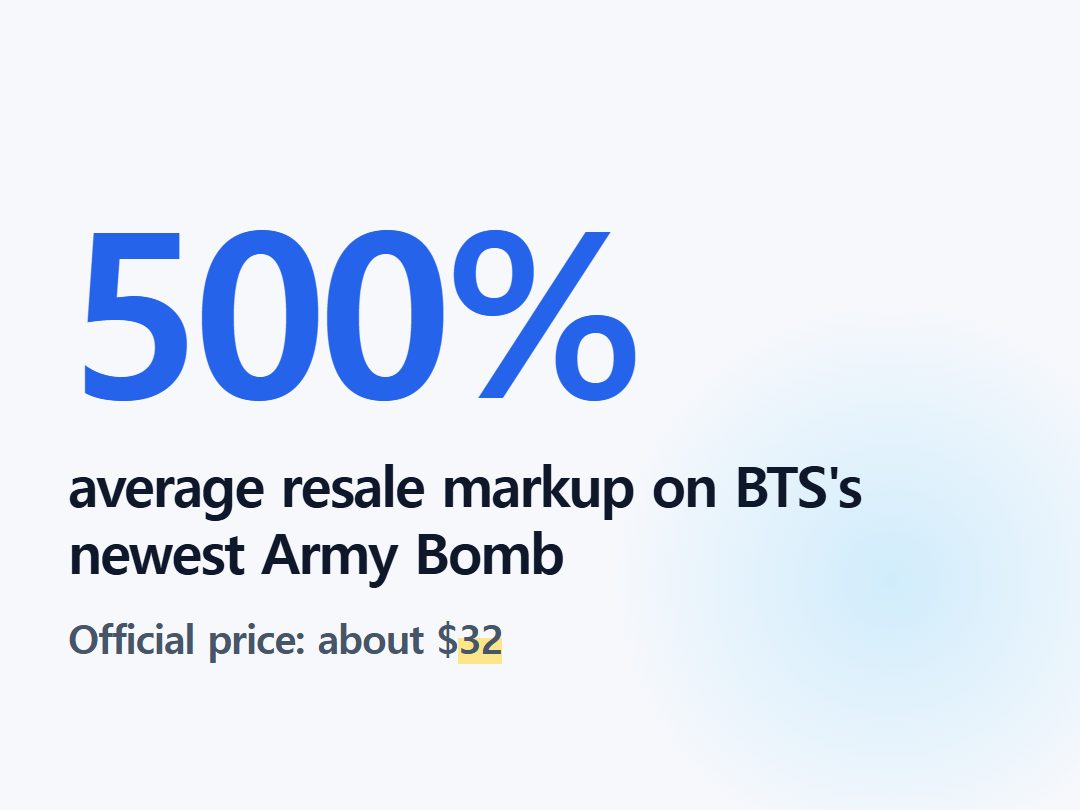
In February 2026, HYBE released the fourth version of BTS's official lightstick, the Army Bomb, at 49,000 won — roughly $32 to $35. It sold out within minutes on Weverse Shop, HYBE's official store.
The short version
- BTS's 2026 Army Bomb launched at 49,000 won, then resold for up to $119.
- Chips, custom molds, and app testing drive lightstick prices from $35 to $70.
- Bigger fandoms mean cheaper sticks per fan since fixed costs spread wider.
It sold out a second time on restock. Within days, the same stick was reselling in Korea for 100,000 to 300,000 won, and listed on the US resale platform StockX for around $119. One buyer on StockX bought 123 units in three days.
Meanwhile, an equally official lightstick from a different group can retail for less than half that launch price, or almost double it, and no agency publishes why.
Why the same wand costs $18 in one fandom and $70 in another
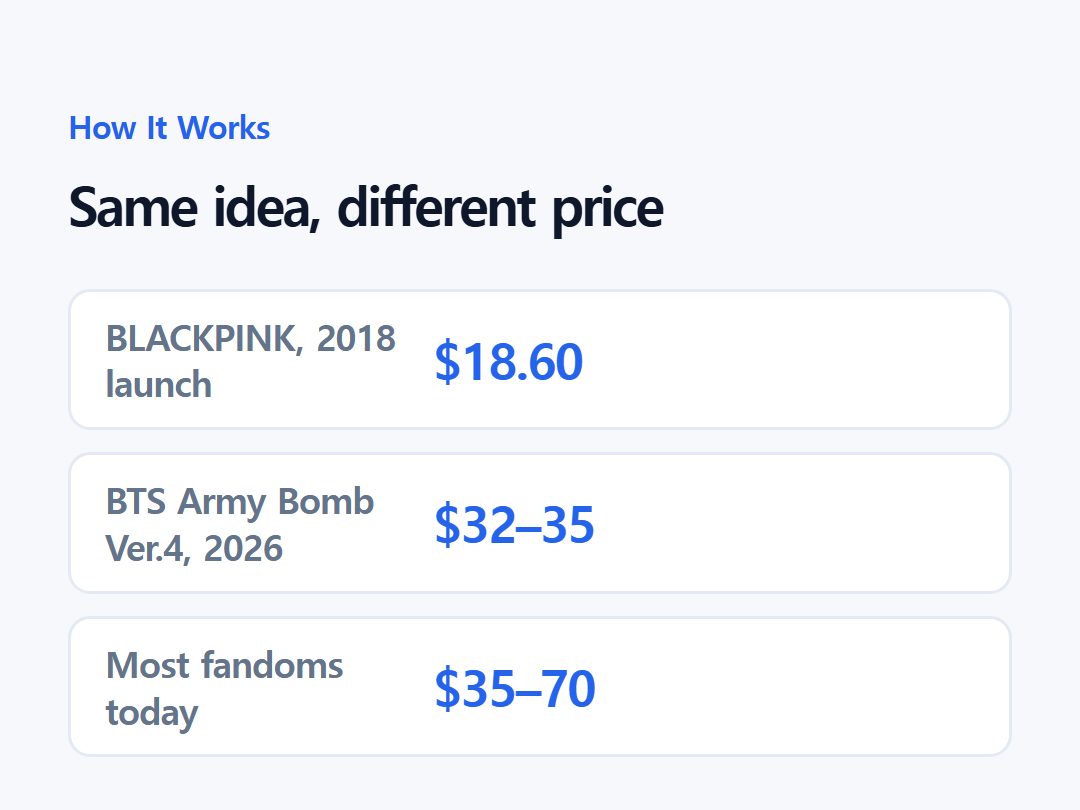
There is no single "K-pop lightstick price." BLACKPINK's first official lightstick launched in 2018 at about $18.60 (20,000 won). Today, across the industry, official Bluetooth-enabled lightsticks typically retail between $35 and $70 depending on the group and the version.
| Lightstick | Price |
|---|---|
| BLACKPINK, 2018 launch | $18.60 |
| BTS Army Bomb Ver.4, official, 2026 | $32–35 |
| BTS Army Bomb Ver.4, resale (StockX) | ~$119 |
| Industry range, most fandoms, 2026 | $35–70 |
An agency — the Korean term for the company that manages a group's training, contracts, and releases (HYBE, SM, JYP, YG, and smaller independents) — sets that price alone. There is no industry-wide standard, and no group's stick is licensed or manufactured by a rival agency.
What's actually inside a $50 piece of plastic
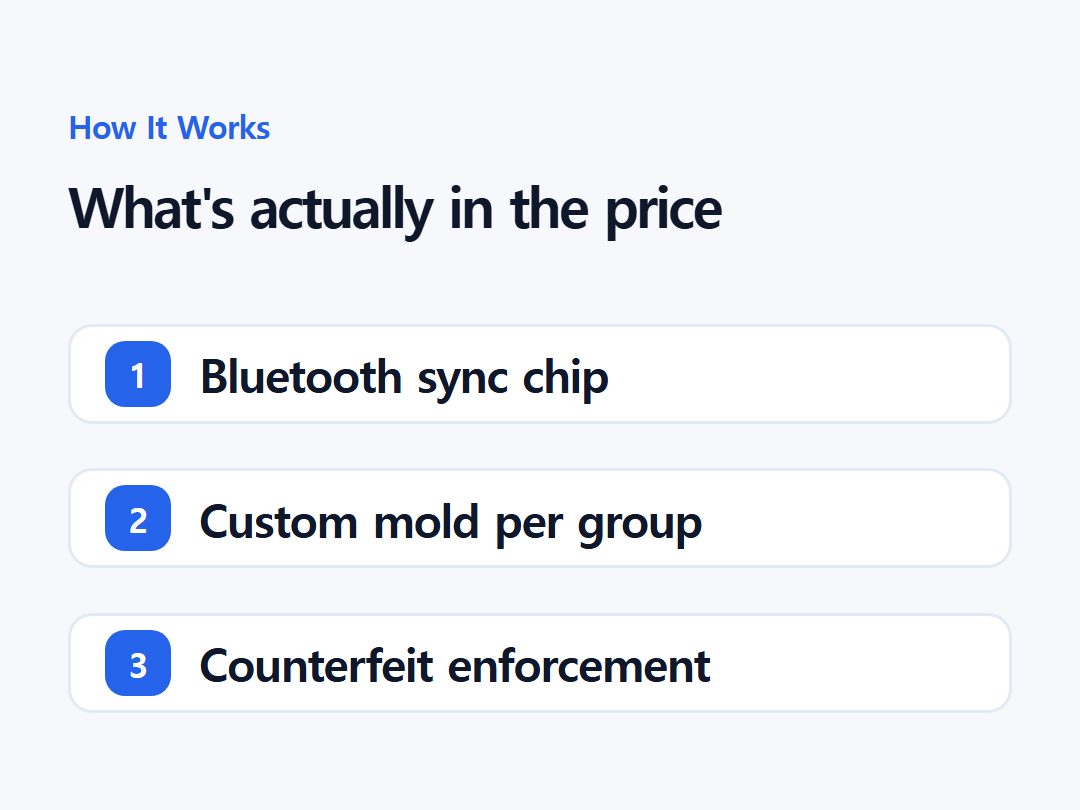
A modern official lightstick is not a glow stick. It contains a microcontroller chip, a Bluetooth receiver, and battery-management circuitry that lets concert staff sync tens of thousands of individual sticks into one moving light display in real time.
Every group's stick is also custom-molded from scratch. A new injection-molding tool has to be built for each design before a single unit is produced.
Pairing also depends on software. Each agency runs its own companion app — HYBE's Weverse app, SM's SMTOWN app — and every lightstick generation has to be tested against that app before release, a development cost with no shared industry standard behind it.
That upfront tooling cost gets divided across the entire production run — the same logic that makes any low-volume product more expensive per unit than a mass-market one.
- A Bluetooth chip and pairing circuitry
- A custom injection-molding tool, unique to each group
- Battery-management hardware for hours of continuous use
The 2021 chip shortage that reset lightstick pricing for good
The clearest evidence that chips drive the price came during the global semiconductor shortage. HYBE's Weverse Shop raised the Army Bomb's price from $57 to $59 in 2021, citing, in its own words, the "persistent global semiconductor shortage." SEVENTEEN's lightstick rose by $3 the same year.
Ashton Jungmin Choi, co-founder of Seoul-based lightstick manufacturer FANLIGHT — which produces sticks for BTS, EXO, and SuperM — described the strain directly to Reuters. Delivery times for the microcontroller chips stretched from about two months to six.
Shipping charges roughly tripled, and the chips themselves cost 30 percent more than a year earlier. Prices never fully came back down; that single shortage reset the baseline that today's $35–$70 range is built on.
Why a bigger fandom means a cheaper lightstick per fan
This is the calculation international fans rarely see. The fixed costs — chip, tooling, app development — are roughly the same whether an agency expects to sell 50,000 units or 500,000.
A group with a larger, more established fandom can spread those costs over far more buyers. That is part of why BTS's newest stick, backed by one of the industry's largest fandoms, could launch at $32 while smaller or newer acts often price similar technology higher.
Market data on the wider lightstick industry shows this split clearly. Large agencies — HYBE, SM, YG, JYP — dominate the high-tech, Bluetooth-synced segment, while a much larger volume of low-cost, non-connected sticks serves smaller and newer fandoms that can't yet support the tooling investment.
In effect, an agency is not just pricing a product. It is pricing a bet on how many people will show up.
The other line item: keeping counterfeits off the shelf
Part of what buyers pay for is enforcement. In April 2025, Korea's trademark police, working with HYBE, raided a counterfeiting operation in Seoul's Namdaemun district and seized 19,356 fake items covering nine groups, including BTS, Seventeen, and Tomorrow X Together.
HYBE's own 2024 enforcement numbers show the scale of the problem. The company took down 13,691 domestic e-commerce listings and 278,568 listings on overseas platforms in a single year.
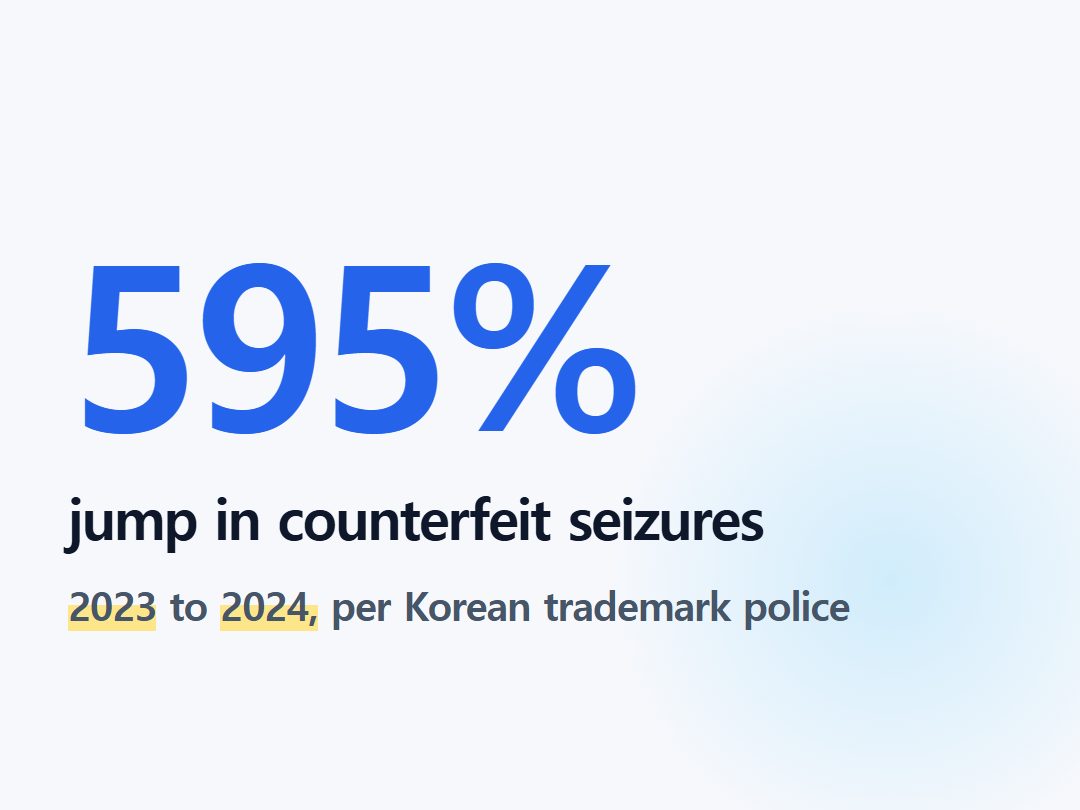
Offline counterfeit seizures jumped 595 percent, from 498 items in 2023 to 3,462 in 2024. Separately, Korean lawmakers reported more than 29,000 counterfeit goods confiscated at concert and festival venues between January and August 2025 alone.
Fake sticks are cheap to make because they skip the chip entirely. They light up, but they cannot pair with a venue's control system, so they cannot join the synchronized display everyone else paid to be part of.
Chasing down and removing that volume of fakes — legal filings, takedown requests, customs cooperation — is a recurring cost, not a one-time expense. It gets folded into the price of every official unit that does sell.
From a single bulb to networked concert hardware
Lightsticks didn't start this complicated. EXO's stick, nicknamed "Eribong," was among the first in the industry to add Bluetooth syncing in 2014, letting SM Entertainment's staff control members' colors from an app during a show.
BTS's own first Army Bomb, released in 2015, was a simple single-color wand with an on/off switch and about six hours of battery life — no wireless features at all.
Bluetooth pairing only arrived in a later generation. Every major agency's flagship group has followed roughly the same arc since: plain light, then app control, then venue-wide synchronization.
What smaller fandoms get instead
Not every group gets the full package. Newer or smaller acts often launch with a simplified version, because the tooling and chip costs don't pencil out against a fandom that hasn't reached stadium scale yet.
- A simplified, non-Bluetooth lightstick
- Licensed slogans, banners, or wristbands instead
- No official cheering item at all, early on
This is also why comparing prices group to group is misleading without context. TWICE's third-generation stick, the Candybong ∞, and SEVENTEEN's Carat Bong both carry full venue-sync technology because both fandoms are large enough to justify it. The underlying economics matter more than any single group's popularity that year.
What agencies still won't say
No agency publishes a cost breakdown for its lightstick — how much goes to the chip, the mold, the trademark filings and enforcement, or profit. Fans are left comparing sticker prices across fandoms with no way to check whether a $70 stick actually costs more to make than a $35 one.
It is also unclear how much of the recent price stability, after the 2021 spike, reflects falling chip costs versus agencies simply choosing to hold prices flat for demand reasons.
Until agencies disclose more, the honest answer to "why does it cost that much" stays partly a guess — one built from resale data and the rare supplier who talks to a reporter.
HYBE counterfeit enforcement, 2023–2025
| Metric | Number |
|---|---|
| Offline seizures, 2023 | 498 items |
| Offline seizures, 2024 | 3,462 items (+595%) |
| Domestic listings removed, 2024 | 13,691 |
| Overseas listings removed, 2024 | 278,568 |
| Namdaemun raid, April 2025 | 19,356 fake items |
| Venue seizures, Jan–Aug 2025 | 29,000+ |
Frequently asked
Why are BTS Army Bomb lightsticks so expensive?
The 2026 Army Bomb launched at 49,000 won (about $32–35) but sold out twice and resold for up to $119 on StockX, with one buyer purchasing 123 units in three days.
Why do K-pop lightsticks cost different amounts for different groups?
Each agency sets its own price based on chip, mold, and app-development costs divided across its fandom size, so prices industry-wide range from $35 to $70 with no shared standard.
How can you tell if a K-pop lightstick is fake?
Counterfeit sticks skip the Bluetooth chip entirely, so they light up but cannot pair with a venue's control system to join the synchronized display.
Sources
Every factual claim above is traceable. We do not translate articles — we gather facts from multiple outlets and write them ourselves.
- Resale prices for BTS light sticks soar ahead of reunion show — The Korea Herald
- Where to Buy BTS' Bestselling Official Version Four Lightstick Online — Billboard
- Here's Why K-Pop Lightsticks Are Going Up In Price & Out Of Stock — Koreaboo
- Pricey light sticks: Global chip crisis creeps into K-pop world — Rappler (Reuters)
- Trademark police seize 20,000 pieces of counterfeit K-pop merch — Korea JoongAng Daily
- Flood of fake K-pop goods disrupts local businesses: lawmakers — The Korea Times
- Bl-ping-bong — BLACKPINK Wiki
- Every Major K-Pop Lightstick, Explained: From ARMY Bomb to Carat Bong (2026 Guide) — K-Pop Headlines
- How K-Pop Lightsticks Transformed Concerts & Shaped Fandom Culture — The Daily Fandom
- Army Bomb — BTS Wiki