A single K-pop dance routine can rack up a billion YouTube views, spawn thousands of cover videos, and define a group's entire public image. The person who invented the steps typically gets paid once, for the pitch, and nothing more after that.
The short version
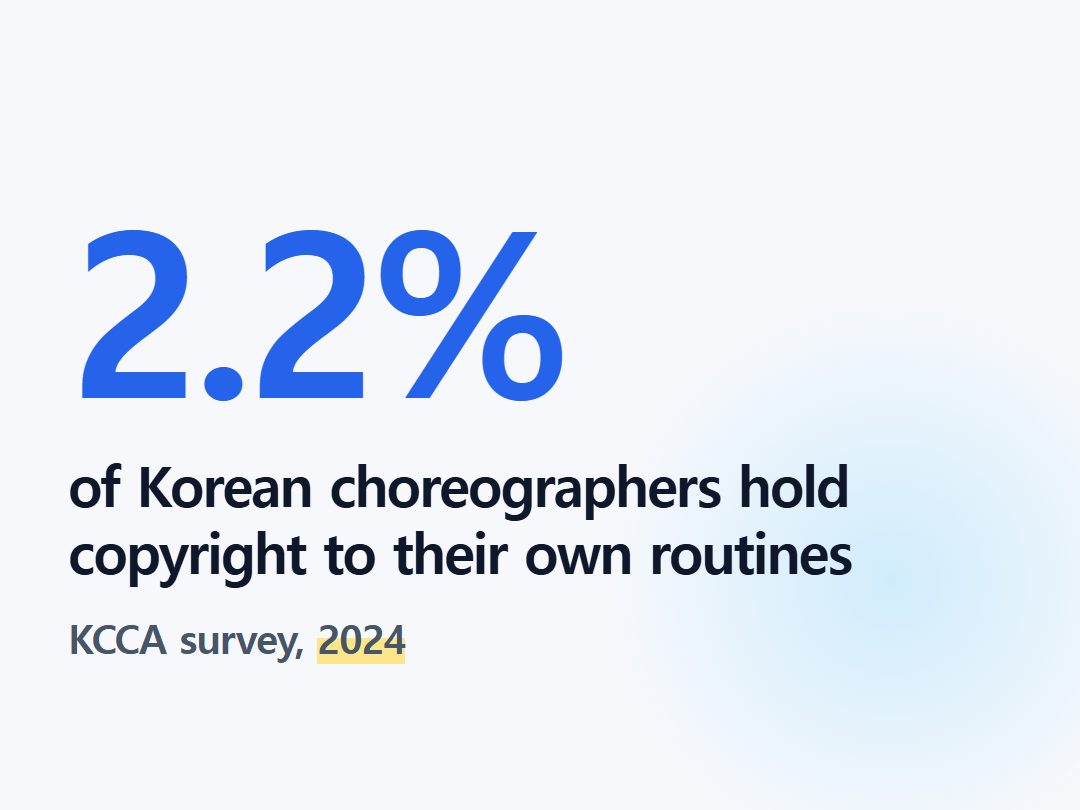
- Only 2.2% of Korean choreographers hold copyright to their own routines.
- Choreographers are typically paid once — composers earn royalties for decades.
- A 2025 bill to protect choreography rights is still stuck in committee.
That gap between what a hit choreography generates and what its creator receives has existed for as long as the idol system itself. It only became a public argument in 2024, when a plagiarism accusation between two agencies pulled the industry's pay structure into the open.
A choreographer is paid once, for a routine that might not even be used
Before a group's title track is finalized, an agency typically invites several choreography teams to submit a sian (시안) — a concept pitch, essentially a demo routine performed and filmed on spec. Teams compete for the same slot.
Only one sian gets chosen. According to a 2024 government-commissioned study on choreography contracts, it is common for a choreographer promised a fixed fee to be paid only half of it if their concept isn't the one selected — even after they have already covered the costs of producing it.
The unpaid work behind a single fee
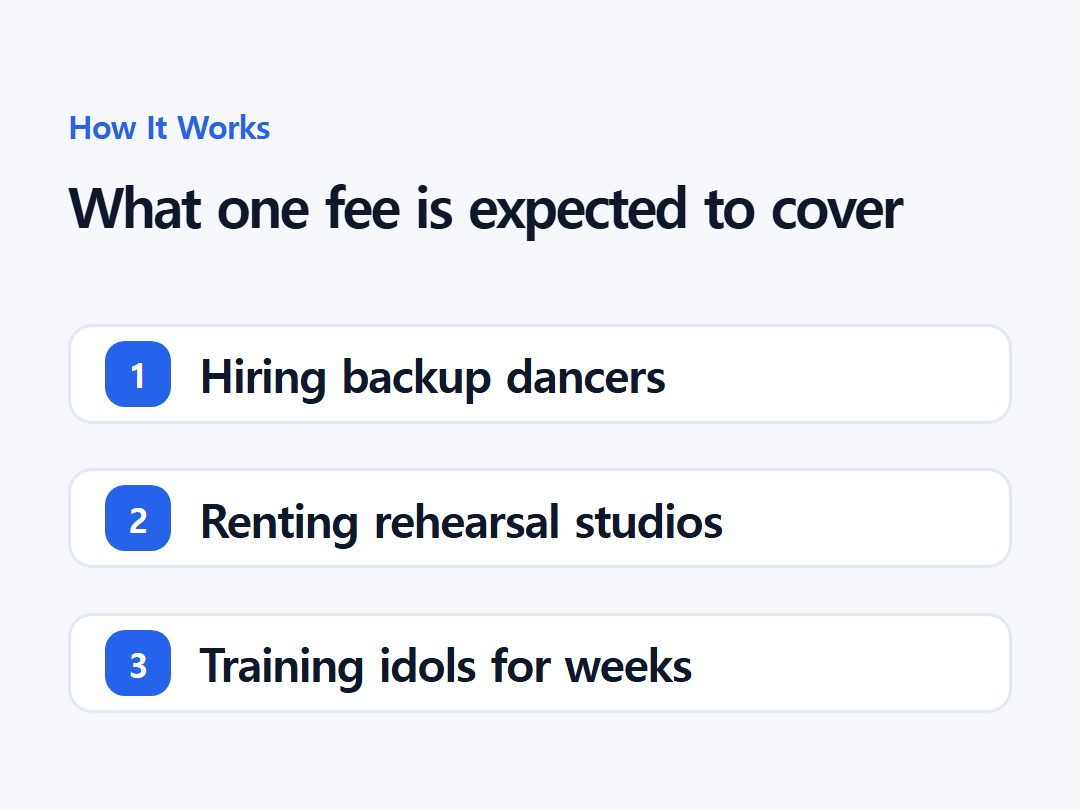
That single upfront fee is also expected to cover far more than the steps themselves. Choreographers routinely pay out of pocket to:
- Hire sub-choreographers and demonstration dancers
- Rent a studio for weeks of rehearsal and filming
- Train the idols directly, sometimes for up to two weeks
Half of choreography deals struck in Korea over the past three years were never even put in writing, according to the same study — leaving disputes over what was promised with no paper trail at all.
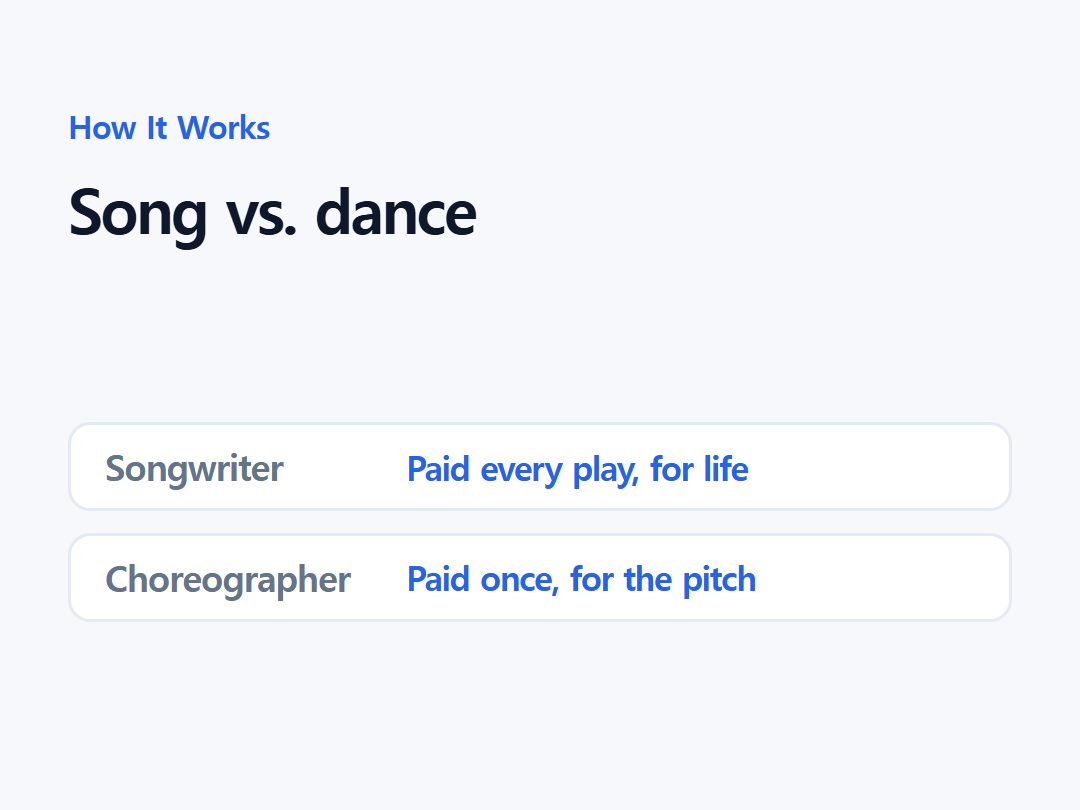
Composers collect royalties for decades. Choreographers almost never do
Once a song is released, its composer and lyricist are registered with Korea's music copyright society and paid a royalty every time the track streams, airs on broadcast, or plays in a store — for the life of the copyright. A choreographer working on the same track sees none of that.
Korean copyright law does technically list dance among the "dramatic works" it protects, but the category was written with theater and ballet in mind, not a pop routine built for a three-minute music video. In practice, that ambiguity has meant idol choreography rarely gets registered or enforced as anyone's property at all.
Only 2.2% of Korean choreographers hold copyright to their own routines
A July survey by the Korea Choreography Copyright Association (KCCA), an industry group formed in 2024, found that just 2.2% of choreographers had registered any of their work with the Korea Copyright Commission. For nearly everyone else, the routine legally belongs to the agency that commissioned it.
That's largely because agencies routinely require choreographers to sign away their rights as a condition of the job. KCCA president Lia Kim, who also founded the 1Million Dance Studio, has said some contracts go further and forbid dancers from even mentioning on social media that they created a particular routine, with companies citing it as a trade secret.
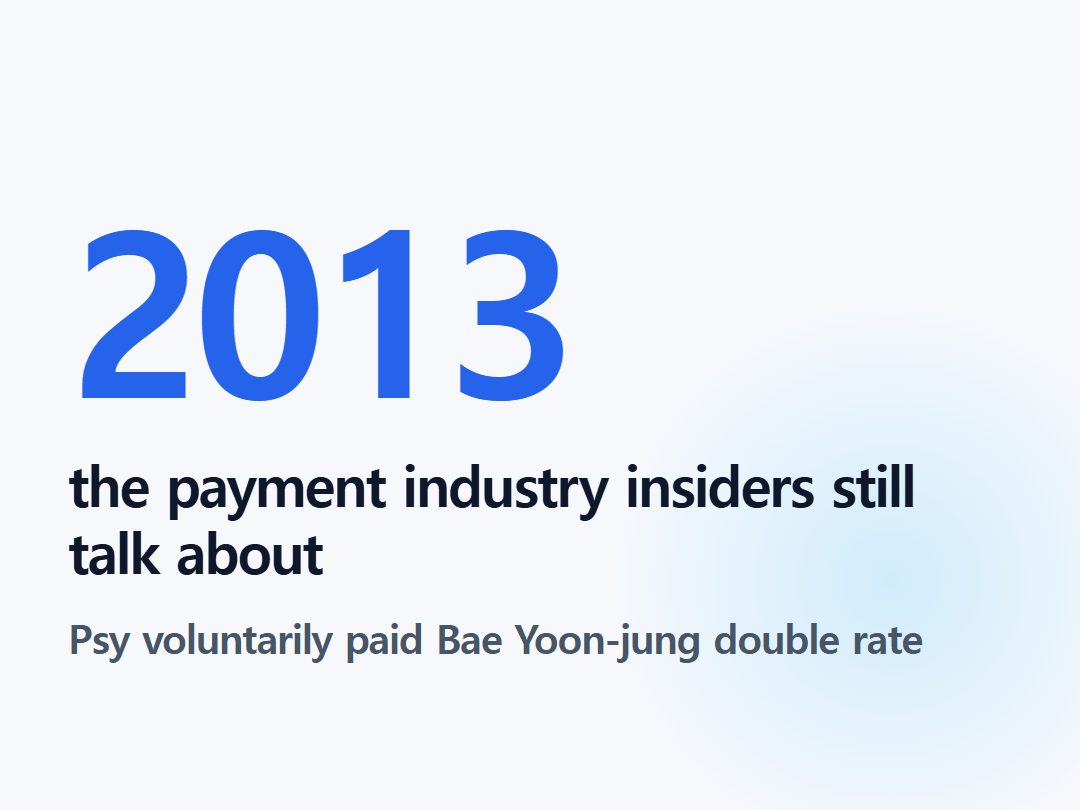
The one choreography payout everyone in the industry still cites, from 2013
When Psy released "Gentleman" in 2013, he asked to reuse a routine originally created for Brown Eyed Girls' "Abracadabra" — a move known as the sigeonbang chum (the "cocky dance") — and its choreographer, Bae Yoon-jung, initially didn't plan to charge him for it. Psy insisted on paying anyway, reportedly around double the going rate for a routine at the time.
Korean press covering the story noted that a standard choreography fee then ran roughly 3 million to 5 million won (about $2,300–$3,800), with only a handful of top choreographers commanding closer to 10 million won. That Psy's voluntary payment became a widely retold industry anecdote, more than a decade later, says more about how rare it was than about any lasting change it produced.
A plagiarism accusation between two idol groups made the pay problem public
In 2024, Min Hee-jin — then CEO of ADOR, the HYBE-affiliated agency behind NewJeans — accused a newer HYBE group, ILLIT, of copying choreography and visual concepts originally created for NewJeans. ILLIT's agency, Belift Lab, denied the claim, arguing the similarities were common across the genre.
The dispute triggered a wider legal battle between ADOR and HYBE over contracts and management, which has produced several separate, at times contradictory court rulings on related claims. But regardless of how any single case resolves, the accusation did something the industry itself hadn't managed in over a decade: it made choreography ownership a mainstream news topic.
Why a group dance is legally murkier to own than a song
Part of the reason choreography rights are so hard to pin down is structural. A finished idol routine is often a patchwork: an agency may combine pieces from several competing sian submissions into one final performance, meaning a single song's choreography can carry contributions from dozens of dancers whose individual share is difficult to measure.
A song, by contrast, usually has a small, clearly credited list of writers whose splits are settled before release. Choreography rarely gets that same accounting, which is one reason lawmakers and industry groups still disagree on how — or whether — to fix it.
Choreographers and music-industry groups don't agree on the fix
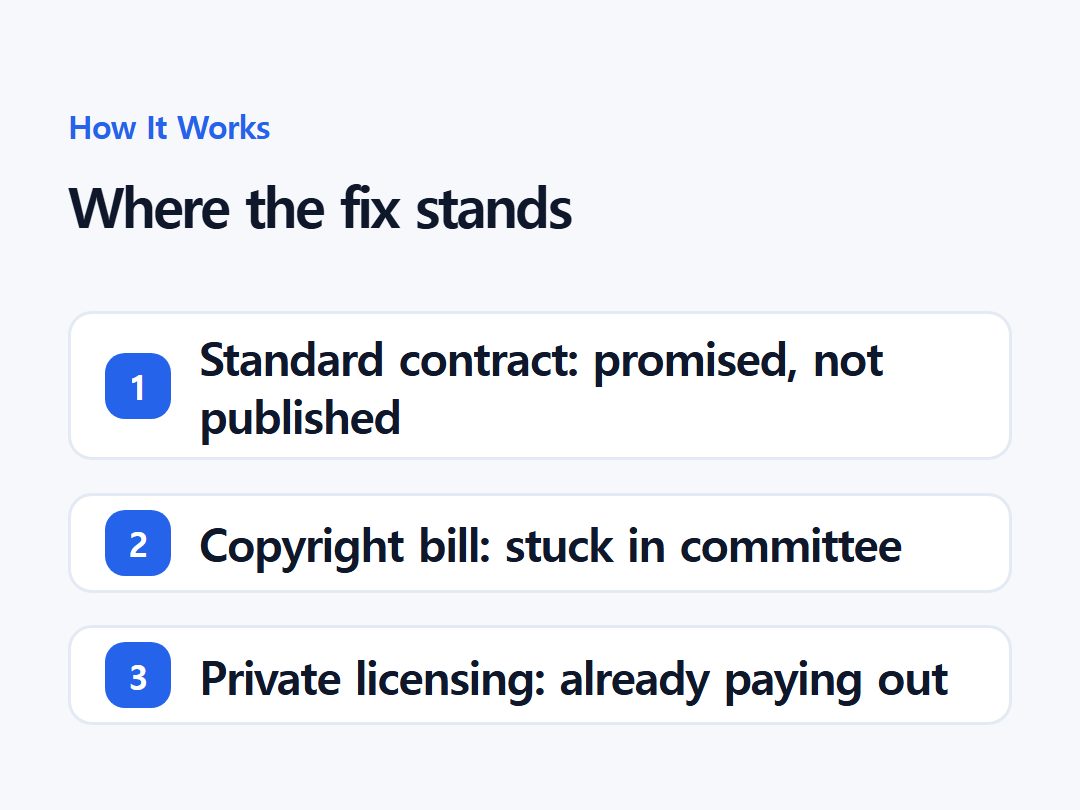
The KCCA wants the Copyright Act amended to explicitly name choreography as its own protected category, paired with a mandatory standard contract covering fair pay and profit-sharing. In March 2025, the Korea Copyright Commission and the KCCA signed a memorandum of understanding to study how that might work.
Music-industry organizations, including the Korea Management Federation, oppose moving that fast. They argue that granting choreography exclusive rights similar to a song's could make agencies wary of using elaborate routines at all.
They also warn that vague standards for splitting streaming or platform revenue could create endless disputes. Their preferred approach is a standard contract first, with any law change to follow — not the other way around.
A bill to add dance to the copyright law is still stuck in committee
South Korea's Culture Ministry told a National Assembly audit in October 2024 that it planned to issue a standard contract for choreographers by early 2025, with SM, YG, and JYP all telling lawmakers they would comply once one existed. That contract has not been formally published.
In September 2025, lawmaker Jin Jong-oh introduced a bill to add "dance creation and other choreographic works" as an explicit category under the Copyright Act, alongside stronger enforcement powers for the standard contract system. As of this writing, the bill remains in committee.
A separate copyright law amendment passed in January 2026, but it addressed ticket scalping and piracy, not choreography.
One company is paying choreographers by working around the law entirely
While legislation stalls, a private deal has moved faster. In late 2024, Naver's metaverse arm, Naver Z, partnered with MVNT — a startup co-founded by choreographer Choi Young-jun, who has created routines for BTS and Twice — to license choreography for a virtual "Dance World" inside the Zepeto app.
MVNT uses 3D motion capture to convert a choreographer's routine into licensed digital content that avatars can perform, with the choreographer paid for the license rather than relying on copyright law to force the issue. It's a narrow, commercial fix rather than an industry-wide one, but it shows how choreographers can get paid even where the law hasn't caught up.
What a viral dance challenge still doesn't pay its creator
Even KCCA leadership describes fair upfront pay as the realistic near-term goal, not the final one. In a December 2025 interview, KCCA director Kim Min-ja said the association's ideal is a system where choreography earns ongoing royalties the way songs do — but called revenue from viral dance challenges "still a distant goal," with securing basic fair compensation coming first.
That leaves the most visible part of a choreography's afterlife — the version fans actually restage, TikTok, and turn into a challenge — as the part its creator is least likely to ever see money from.
Timeline of the choreography pay dispute
| Date | Event |
|---|---|
| 2013 | Psy pays choreographer Bae Yoon-jung roughly double the standard fee to reuse her Abracadabra routine |
| 2024 | Min Hee-jin accuses ILLIT of copying choreography created for NewJeans, making the issue mainstream |
| October 2024 | Culture Ministry tells lawmakers a standard choreographer contract is coming by early 2025 |
| March 2025 | Korea Copyright Commission and KCCA sign an MOU to study a law change |
| September 2025 | Lawmaker Jin Jong-oh introduces a bill adding dance to the Copyright Act |
| December 2025 | KCCA director calls royalties from viral dance challenges "still a distant goal" |
| January 2026 | A copyright amendment passes, but covers ticket scalping and piracy, not choreography |
Frequently asked
How much do K-pop choreographers get paid?
Standard fees have run about 3 million to 5 million won (roughly $2,300–$3,800) per routine, with only a handful of top choreographers reaching closer to 10 million won, and it's typically a single upfront fee with no royalties after.
Do K-pop choreographers get royalties like songwriters do?
Almost never — composers are registered with Korea's music copyright society and paid every time a song streams or airs, but choreographers are usually paid once upfront and see nothing after release.
What was the Min Hee-jin and ILLIT choreography dispute about?
In 2024, Min Hee-jin accused HYBE group ILLIT of copying choreography and visual concepts created for NewJeans, which Belift Lab denied, and the accusation turned choreography ownership into mainstream news for the first time.
Sources
Every factual claim above is traceable. We do not translate articles — we gather facts from multiple outlets and write them ourselves.
- A year after NewJeans-ILLIT clash, copyright conundrum still engulfs K-pop — Korea JoongAng Daily
- Will standards emerge to resolve NewJeans, ILLIT choreography dispute? — The Korea Times
- Korean choreography copyrights to be protected by Naver Z deal — KED Global
- "우리도 저작권료 받고 싶어요"...K-POP 안무가들의 고민 — The Economist Korea (이코노미스트)
- K-Pop Dance Copyright Law Amendment Premature: Differences in Opinions Between Music Industry and Choreographers Association — Asia Business Daily
- 野 진종오 안무가도 저작권 보호받아야…저작권법 개정안 발의 — The Korea Economic Daily (한국경제)
- [여적] 500만원짜리 시건방춤 — The Kyunghyang Shinmun
- 배윤정 "싸이에 '시건방춤' 안무비 2배 받았다…국내 첫 저작권료" — Money Today
- K-pop agencies agree to comply with potential choreography copyright guidelines — Korea JoongAng Daily